100+ Google reviews



Batana oil has quickly moved from a niche ingredient to a “miracle” hair oil, with social media users praising it as a solution for thinning ends and slow regrowth. Testimonials positioning batana oil as a revival treatment for stressed hair have expanded interest in this lesser-known remedy.
Rosemary oil, pumpkin seed oil, and castor oil already hold strong reputations in scalp care. Batana oil now sits alongside these familiar options, often described as richer and more restorative. That positioning shapes expectations, but is this oil really a good substitute for the other, better-known options? Here’s why batana oil for hair growth has become such a phenomenon.
What is Batana Oil?
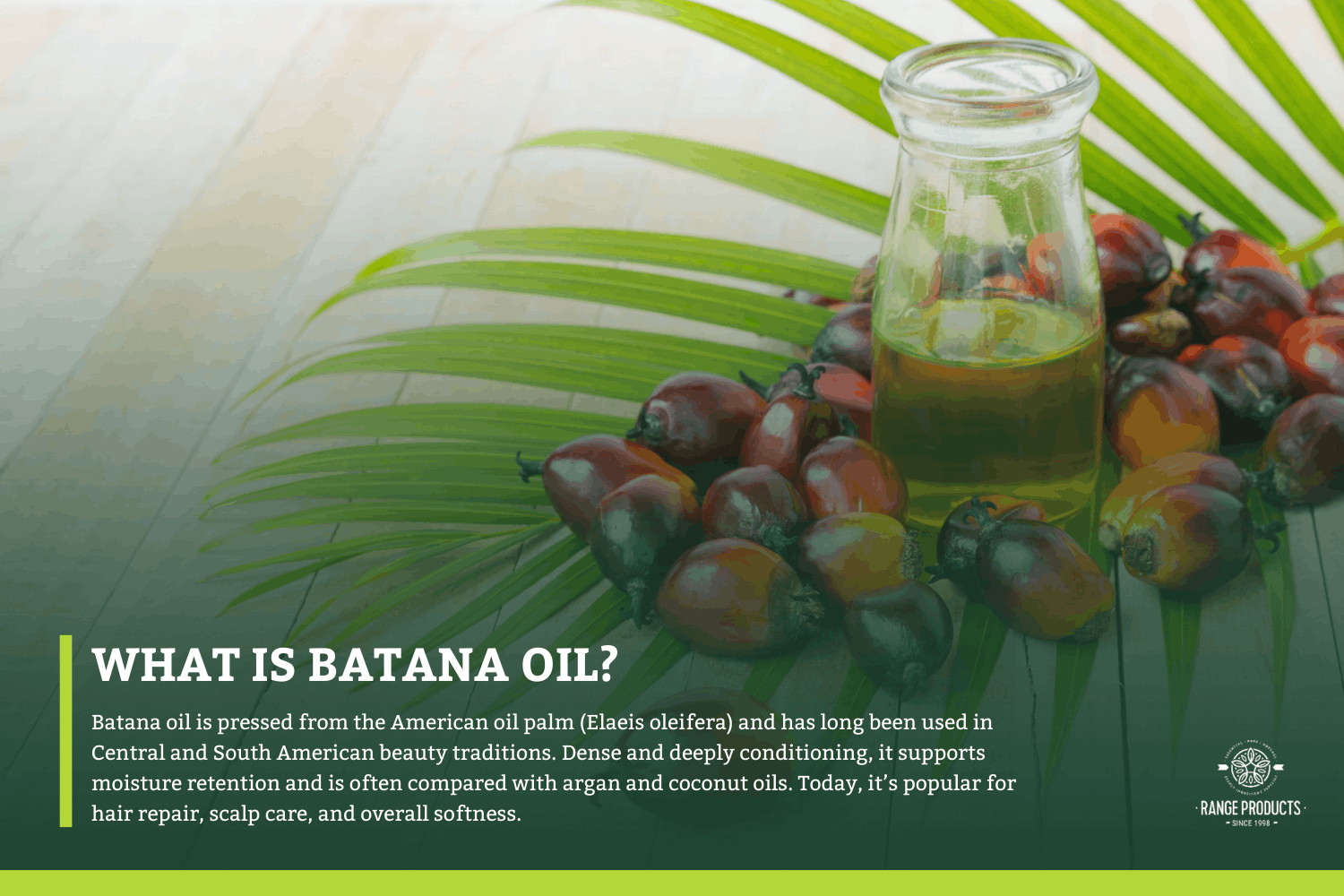
Batana oil is a plant oil pressed from the American oil palm, known botanically as Elaeis oleifera. Communities in Honduras and parts of Central and South America have used the oil for generations as part of traditional beauty care. And recently, rising global demand has pushed batana oil into mainstream beauty routines, including among consumers searching for “natural” hair solutions.
In texture, batana oil feels dense and deeply conditioning. Many people compare the oil with argan and coconut oil, since each one supports moisture retention in different ways. However, Batana oil stands out for its reputation for restoring damaged strands and supporting scalp comfort.
Online discussions frequently center on batana oil hair growth claims, with social media amplifying before-and-after results that spark curiosity and trial. Interest now extends beyond scalp care, as shoppers incorporate the oil into both their hair and skin routines for added softness and conditioning.
What does Batana Oil Contain?
Pure batana oil contains a dense profile of fatty acids that support moisture retention in dry hair and scalp. Oleic acid and linoleic acid help soften the hair fiber, while palmitic acid and stearic acid contribute to a richer texture. This fatty acid balance allows the oil to coat strands and reduce surface roughness without feeling overly light.
The oil also provides natural antioxidants that play a protective role in topical care. Vitamin E and carotenoid compounds, which act as precursors to vitamin A, help limit oxidative stress on the scalp. Environmental exposure can weaken hair over time, and antioxidant support helps maintain condition and shine.
The nutrient profile does not directly activate new hair follicles. Instead, the composition supports a healthier environment where existing hair can look smoother and feel stronger with consistent use.
Benefits of Batana Oil for Hair
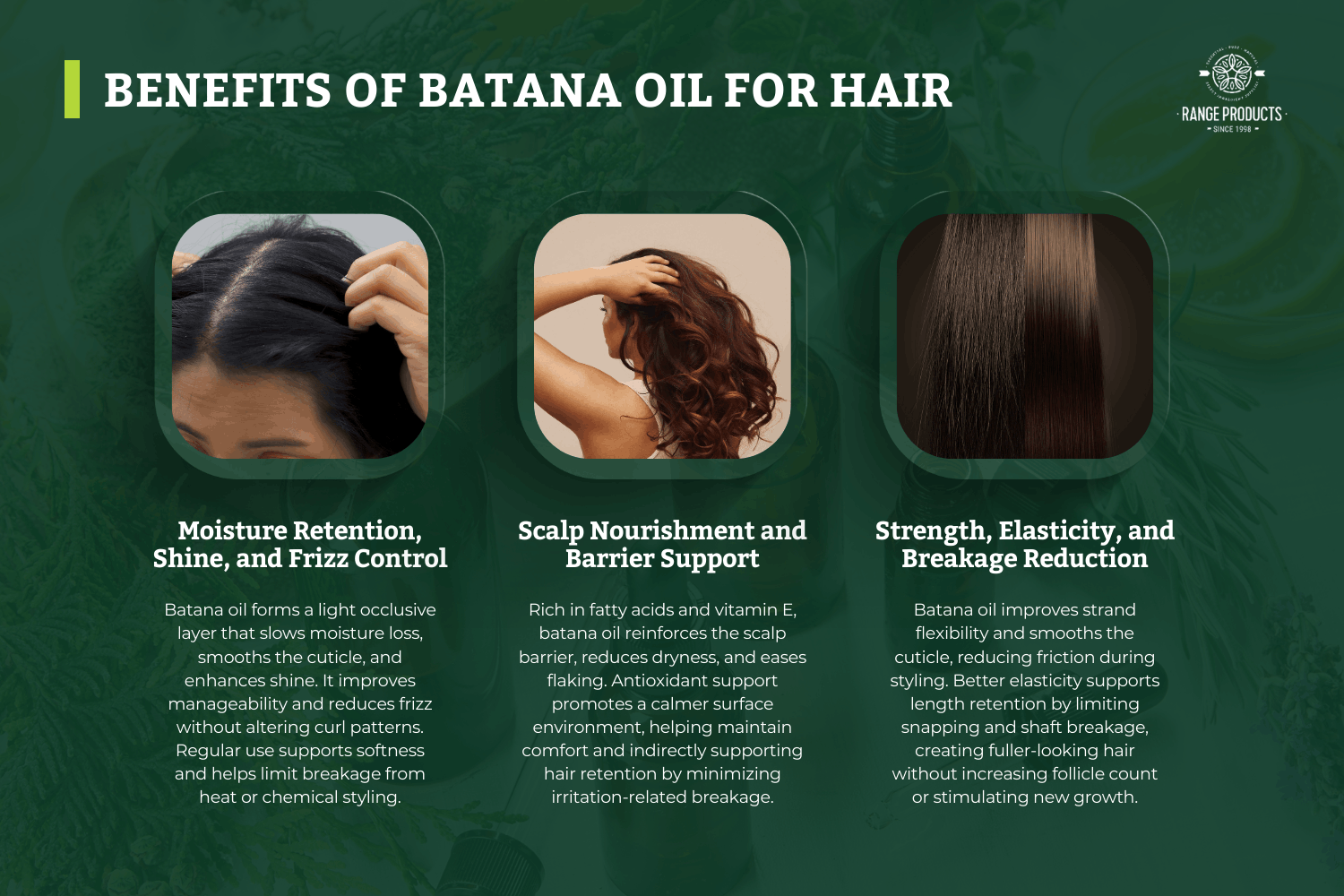
People often experience thicker strands, hair regrowth, and even reduced visibility of grey hair as the benefits of batana oil.
When used consistently, batana oil can support overall hair health by improving moisture retention at the strand level. A conditioned surface reflects more light, creating the appearance of a smoother texture. That visible change can influence how full the hair looks, even without faster growth.
Moisture, Shine, and Frizz Control
Batana oil works at the surface of the hair fiber by forming a light occlusive layer. That layer helps slow moisture loss, which supports a smoother texture in dry or textured hair. When used as a targeted hair product, the oil can improve manageability without altering natural curl patterns.
A smoother cuticle reflects more light, and increased light reflection creates visible shine and reduces the appearance of frizz in humid conditions. This surface-conditioning effect can make hair appear thicker, even though the growth rate remains unchanged.
Some users apply batana oil as a pre-wash treatment or blend it into a nourishing hair mask. In that format, the oil supports deeper conditioning for strands exposed to heat styling or chemical services. Consistent use helps maintain softness while limiting breakage along the hair shaft.
Scalp Nourishment and Barrier Support
Batana oil contains fatty acids and vitamin E that help reinforce the scalp’s natural barrier. When you massage the oil into your scalp, the emollient layer can reduce dryness and ease surface flaking. A more stable barrier helps limit transepidermal water loss, which supports ongoing comfort.
Vitamin E also provides antioxidant support at the scalp level. Environmental exposure can disrupt the skin’s balance, especially in dry climates or after frequent washing. Consistent topical use helps maintain a calmer surface environment without relying on harsh hair treatments.
A comfortable scalp often supports better hair retention over time. Reduced irritation can lower the stress on fragile strands near the root caused by scratching. That indirect support does not stimulate new follicles, but it can help preserve existing hair by limiting avoidable breakage.
Strength, Elasticity, and Breakage Reduction
Conditioning oils can improve strand flexibility by supporting the hair’s outer structure. When elasticity improves, hair stretches slightly under tension instead of snapping. That flexibility helps retain length, which is why batana oil can help if you’re experiencing hair loss due to fragility.
Regular application supports smoother cuticles, which reduces friction during brushing and styling. Reduced friction can lead to stronger hair over time because fewer strands break.
Many people hope that oils will prevent hair loss at the root level. In reality, fuller, longer-looking hair often results from reduced breakage rather than from new follicle growth. Protecting existing strands creates visible improvement, even when total follicle count remains unchanged.
Who Might Benefit Most From Batana Oil?
Batana oil suits people with hair types that respond well to richer textures in structured hair care routines. Thick, curly, and coily strands often benefit from heavier oils that slow moisture loss. Chemically treated or heat-damaged hair may also respond well because porous areas absorb conditioning lipids more readily.
Dry or tight scalps can also feel more comfortable with a protective oil layer. When applied carefully, batana oil can support softness across both the skin and hair. Individuals without active scalp conditions may find that added nourishment improves day-to-day manageability.
However, very fine or low-density hair may not tolerate dense oils at the root. Excess weight can flatten the volume and create a greasy finish. In those cases, lighter formulations or minimal application through the mid-lengths may provide better balance.
How to Use Batana Oil in Your Hair Routine
Batana oil can fit into a routine as a pre-wash treatment or a small finishing touch on dry ends. Consistent use supports smoother texture and can contribute to beautiful hair over time.
Patch Testing and Safety First
Before full use, apply a small amount to the back of the ear or the inner forearm. Wait 24 hours to check for redness or irritation, especially if you have sensitive skin or an existing scalp condition. Careful testing helps reduce the risk of unexpected reactions.
Choose minimally processed formulas without added fragrance when possible. Simple compositions are often better tolerated by reactive skin. If irritation develops, rinse your hair and scalp thoroughly and discontinue use.
As a Pre-Shampoo or Deep-Conditioning Treatment
To use batana oil as a treatment, warm a small amount between your palms. Massage the oil into the scalp and hair, then smooth it through your lengths, focusing on damaged areas. Leave the oil on for at least 30 minutes, or overnight if heavier conditioning suits your routine.
After the treatment, shampoo carefully to remove any excess residue. You may need to cleanse twice to fully rinse your hair without buildup. Most hair types respond well to 1 to 3 times per week, adjusting frequency based on oiliness and styling habits. For lighter maintenance, apply a minimal amount to the ends as a leave-in conditioner substitute, avoiding the roots.
As a Leave-in on Mid-Lengths and Ends
Batana oil can work well as a light finishing step. Apply 1 to 3 drops to damp or dry mid-lengths, then smooth the oil through your hair with your palms. Focus on the ends of your hair to tame frizz and boost shine while keeping the roots free from excess weight.
Curly and coily textures often respond well to this approach. After applying a water-based leave-in conditioner, press a small amount of oil over the surface to help seal in moisture. This layering method supports definition without flattening natural volume.
Combining Batana Oil With Other Products or Treatments
Batana oil can complement hydrating shampoos and conditioners designed for dry strands. Lightly spread the oil through your hair after washing to reinforce softness and reduce surface roughness. Pairing the oil with a weekly hair mask may enhance smoothness in high-porosity sections.
If you use a topical treatment for hair loss, avoid applying oil directly over the medicated area on the same day. Instead, limit oil application to the mid-lengths and the ends of your hair. Consult a qualified health professional before combining treatments to ensure they are compatible.
Potential Side Effects and When to Avoid It
Batana oil is often promoted as a miracle oil, but heavy application can create unwanted effects. Excess use may leave the scalp greasy or contribute to product build-up along the hairline. In some cases, frequent oil layering on the roots may increase the risk of clogged follicles.
Sensitive individuals may notice irritation after topical use. Redness, itching, or small breakouts near the temples can signal that the skin barrier feels overwhelmed. If flaking increases or shedding worsens, discontinue use and reassess your routine.
Stop using the oil if discomfort persists beyond mild, short-term sensitivity. Seek medical advice if you experience sudden shedding, patchy hair loss, scalp pain, or visible scaling. When evaluating different batana oil products, review ingredient lists carefully and avoid formulas with added fragrance if you are prone to reactivity.
Ready to upgrade your hair care routine with batana oil? At Range Products, we offer a collection of essential oils so you can compare formulas, ingredients, and recommended uses. Then, choose the option that best fits your hair type and goals.
Batana Oil for Hair Growth FAQs
What’s the difference between batana oil and palm oil?
Batana oil comes from the American oil palm, Elaeis oleifera, and is traditionally produced in small batches for cosmetic use. Palm oil refers to oil from Elaeis guineensis and is widely used in food and large-scale manufacturing. The two oils differ in origin, processing scale, and typical end use.
Can batana oil regrow hair?
Batana oil does not regrow hair or activate new follicles. It can improve moisture retention and reduce breakage, which may make hair appear fuller over time. Visible improvement usually comes from better strand protection rather than new hair growth.
Is batana oil safe for skin care too?
Batana oil can be used on the skin as an emollient, especially for dry areas. Its fatty acids and vitamin E help support the skin barrier. As with any topical product, patch testing is recommended before regular use.
Is batana oil environmentally friendly?
Environmental impact depends on how the oil is sourced and produced. Small-scale, traditionally harvested batana oil may have a different footprint than industrial palm cultivation. Look for transparent sourcing information when environmental concerns are a priority.
Back to Top: Batana Oil for Hair Growth: Hydrated, Shiny Strands or Just Hype?