100+ Google reviews




Lavandin oil appears in soaps, cleaning products, and diffusers, yet it often sits in the shadow of traditional lavender. For many buyers, the name raises a simple question: what is lavandin oil, and how does it differ from the lavender they already know?
Lavandin essential oil offers a stronger aroma, higher yield, and broader use in household formulations. Understanding these differences helps clarify where lavandin fits best – whether in personal care, home fragrance, or functional cleaning blends.
What is Lavandin Oil?
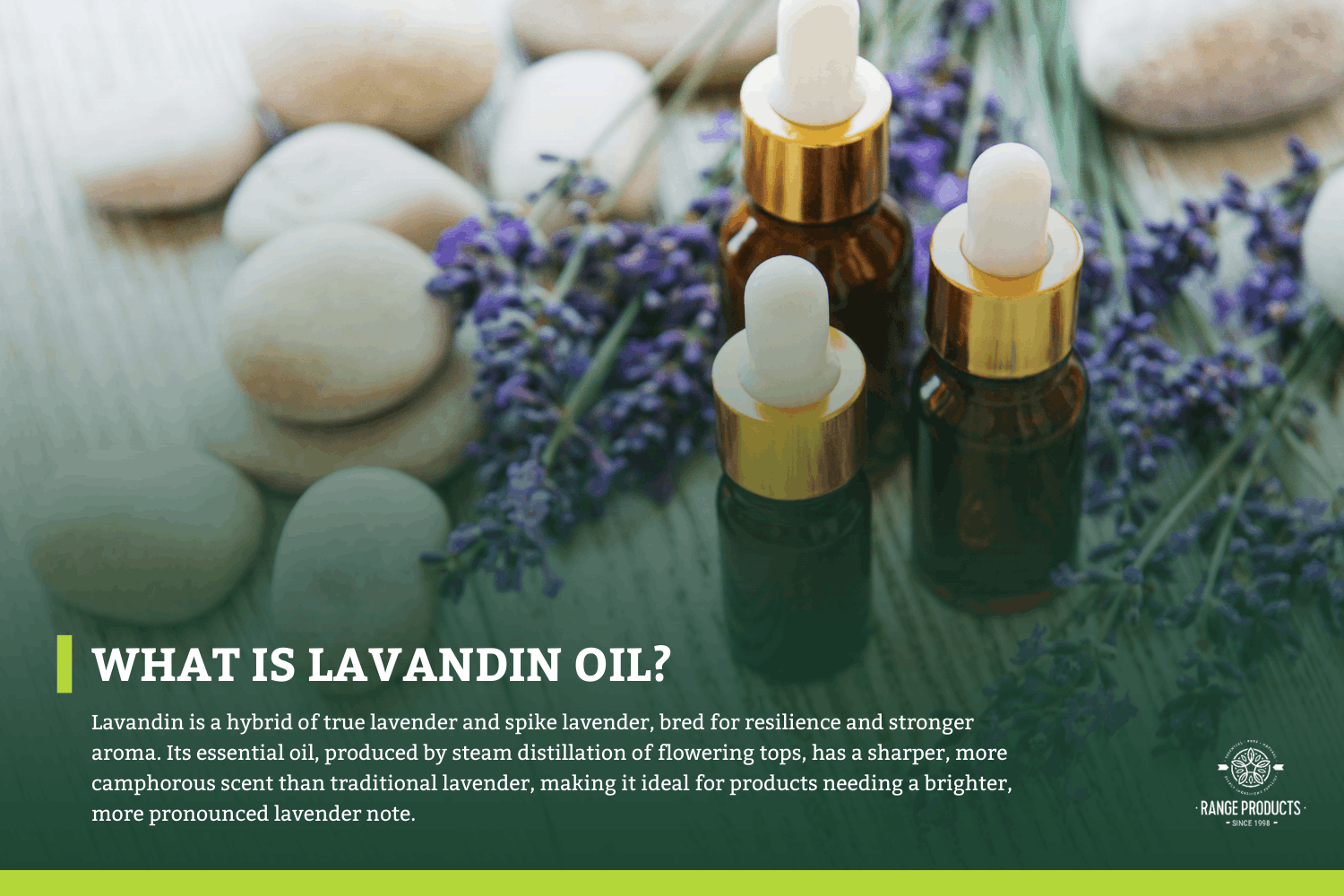
Lavandin is a cultivated hybrid of true lavender and spike lavender, developed to combine resilience with aromatic strength. The resulting lavandin essential oil carries a sharper profile than traditional lavender, due to the plant’s natural chemistry rather than processing methods.
Lavandin essential oil is made through steam distillation of the flowering tops. Steam passes through freshly harvested blooms to release volatile compounds, which then condense into an aromatic liquid. This method preserves the oil’s defining components while maintaining consistency across batches.
The aroma differs noticeably from true lavender. Lavandin presents a more camphorous scent with a brighter edge that travels well in open spaces. Many formulators choose this oil for products that require a clearer, more pronounced lavender note.
Lavandin vs Lavender: Differences
Plant and Appearance
Both plants belong to the Lavandula family, yet clear visual differences distinguish lavender from lavandin in the field. Lavandin plants grow taller and produce fuller flower spikes. Each stem often carries up to three flower heads, which creates a denser look in cultivation.
True lavender usually forms a single flower head per stem. The more compact structure gives lavender fields a softer outline.
Scent and Composition
Lavender and lavandin differ most clearly in aroma and chemical profile. When comparing lavender and lavandin, the contrast becomes noticeable as soon as each bottle is opened. Lavender offers a softer, sweeter scent that many people associate with rest and calm environments.
Lavandin carries a brighter, more herbaceous tone with higher levels of camphor and 1,8-cineole. These natural constituents give lavandin essential oil’s aroma a sharper edge, making it feel more stimulating in active spaces. The composition also supports its strong deodorising character in practical applications.
Typical Uses
Lavender appears in blends designed for sleep support and relaxation. Many people apply diluted lavender to soothe minor burns and bites in everyday situations. The oil’s milder scent suits body care intended for calm environments.
Lavandin is more often used in soaps, detergents, and cleaning sprays. Product makers value lavandin essential oil’s strength in insect-repelling blends and household formulations. The clearer, stronger aroma persists even after dilution in wash-off products.
Lavandin Essential Oil Benefits
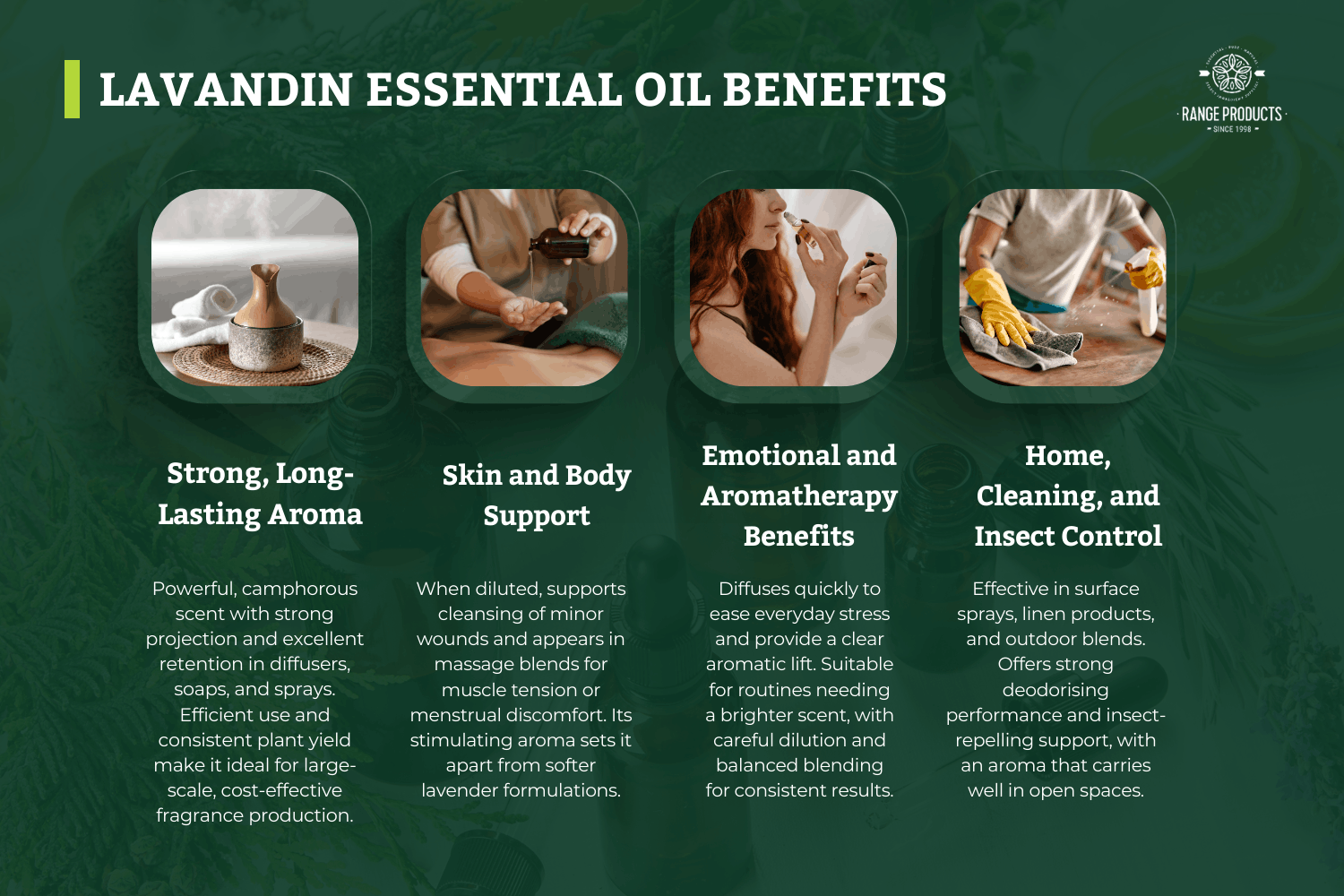
Lavandin stands out for its strength and versatility in everyday formulations. When comparing lavender and lavandin, many formulators choose lavandin for applications that require greater aromatic impact.
Strong, Long-Lasting Aroma
Lavandin carries a powerful scent that holds well in diffusers and room sprays. Only a few drops are needed to scent a medium-sized space effectively. This efficiency links directly to lavandin essential oil’s higher camphor content and strong projection.
Manufacturers often select lavandin for its affordability in body care and household products. The oil performs well in soap bases and surface sprays where fragrance retention matters. The plant’s consistent yield and impressive growth rate also support larger-scale production.
Skin and Body Support
When properly diluted, lavandin can help keep minor skin wounds clean and protected. The oil’s natural constituents contribute to its cleansing profile in topical blends. Clear formulation guidelines remain essential for safe application.
Massage therapists sometimes include lavandin in blends designed to ease muscle tension. Some practitioners also use diluted lavandin in abdominal massages for menstrual discomfort. In both cases, the stimulating aroma of lavandin essential oil differentiates it from softer lavender-based blends.
Emotional and Aromatherapy Benefits
When diffused, lavandin can help ease everyday feelings of stress and worry. The scent fills a room quickly and maintains a steady presence. In some routines, users include the aroma of lavandin essential oil at night, in a similar way to lavender oil.
The sharper profile does not replace lavender in every blend. Instead, lavandin suits situations where a clearer aromatic lift is preferred. Careful dilution and thoughtful blending remain important for consistent results.
Home, Cleaning, and Insect Control
Lavandin works well in all-purpose sprays designed to freshen kitchens, bathrooms, and living areas. The oil’s camphor content supports the strong deodorising effect of lavandin essential oil in surface cleaners. The fragrance remains noticeable long after application.
Product makers also include lavandin in linen sprays and wardrobe sachets. Outdoor blends often feature lavandin to help repel insects in patios or garden spaces. The aroma carries well in the open air without becoming heavy.
How to Use Lavandin Essential Oil
In Personal Care
Add diluted lavandin to body lotions, bath products, or massage oils. The oil blends well with lemon, eucalyptus, or rosemary for a fresh, clean profile. Lavandin essential oil’s sharper profile supports formulations designed for daytime use.
Always follow recommended dilution rates for leave-on products. A carrier oil helps disperse the essential oil evenly across the skin. Patch testing supports safer application in sensitive individuals.
Around the Home
Use lavandin in room sprays, fabric mists, and DIY carpet fresheners. The fragrance holds well in open living areas without becoming heavy. Many households prefer the stronger projection of lavandin essential oil in cleaning blends.
Add a few drops to laundry detergent or fabric softener for fresher-smelling clothes. The scent carries through the wash cycle and remains noticeable after drying. Store blended products in sealed containers to protect aroma quality.
In Diffusers and Baths
Diffuse lavandin to create an uplifting yet soothing atmosphere in a home or workspace. The aroma travels effectively through well-ventilated rooms. Adjust the number of drops based on room size and diffuser capacity.
Add a few drops of the proper dilution to a warm bath for a relaxing soak. Combine the oil with a dispersant before adding it to water. This step supports even distribution across the bath surface.
Safety and Precautions
Lavandin requires the same care and respect as any other essential oil. When comparing lavender and lavandin, the higher camphor content in lavandin warrants particular attention to dilution. Responsible use supports both safety and consistent results.
Dilution and Patch Testing
Always dilute lavandin oil in a suitable carrier oil before applying it to the skin. Proper dilution reduces the risk of irritation while maintaining aromatic benefits. Patch-test a small area first to check for sensitivity or allergy.
Apply the diluted blend to the inner forearm and wait 24 hours. If redness or discomfort appears, discontinue use. Lavandin essential oil’s potency makes careful measurement especially important in leave-on products.
Who Should Be Cautious
People who are pregnant or nursing, as well as individuals with heart, hormone, bleeding, or seizure conditions, should seek medical advice before use. Professional guidance helps assess whether the stimulating properties of lavandin essential oil are appropriate.
Do not ingest lavandin oil under any circumstances. Avoid contact with the eyes, inner nose, and other sensitive areas. Store bottles securely and keep them out of reach of children and pets.
Looking for an essential oil for a specific purpose? Contact Range Products and let us help you find the right oil for your needs.
What is Lavandin Oil FAQs
Can lavandin essential oil be used in candle making?
Yes, lavandin is commonly used in candles because its stronger scent holds well in wax. The oil’s camphor content helps the fragrance remain noticeable even after curing and burning.
How should lavandin essential oil be stored?
Store lavandin essential oil in a tightly sealed amber or dark glass bottle. Keep the bottle in a cool, dry place away from direct sunlight to help preserve its chemical profile and aroma.
Is lavandin oil the same as lavender oil?
No. Lavandin oil comes from a hybrid plant, while lavender oil comes from true lavender. Lavandin has a stronger, more camphorous scent and is often used in cleaning and household products.
Is lavandin oil safe for dogs?
Essential oils can affect animals differently from how they affect humans. Consult a veterinarian before using lavandin oil around dogs, especially in diffusers or topical products.
Back to Top: What is Lavandin Oil: A Guide to Lavandin Essential Oil Benefits