100+ Google reviews




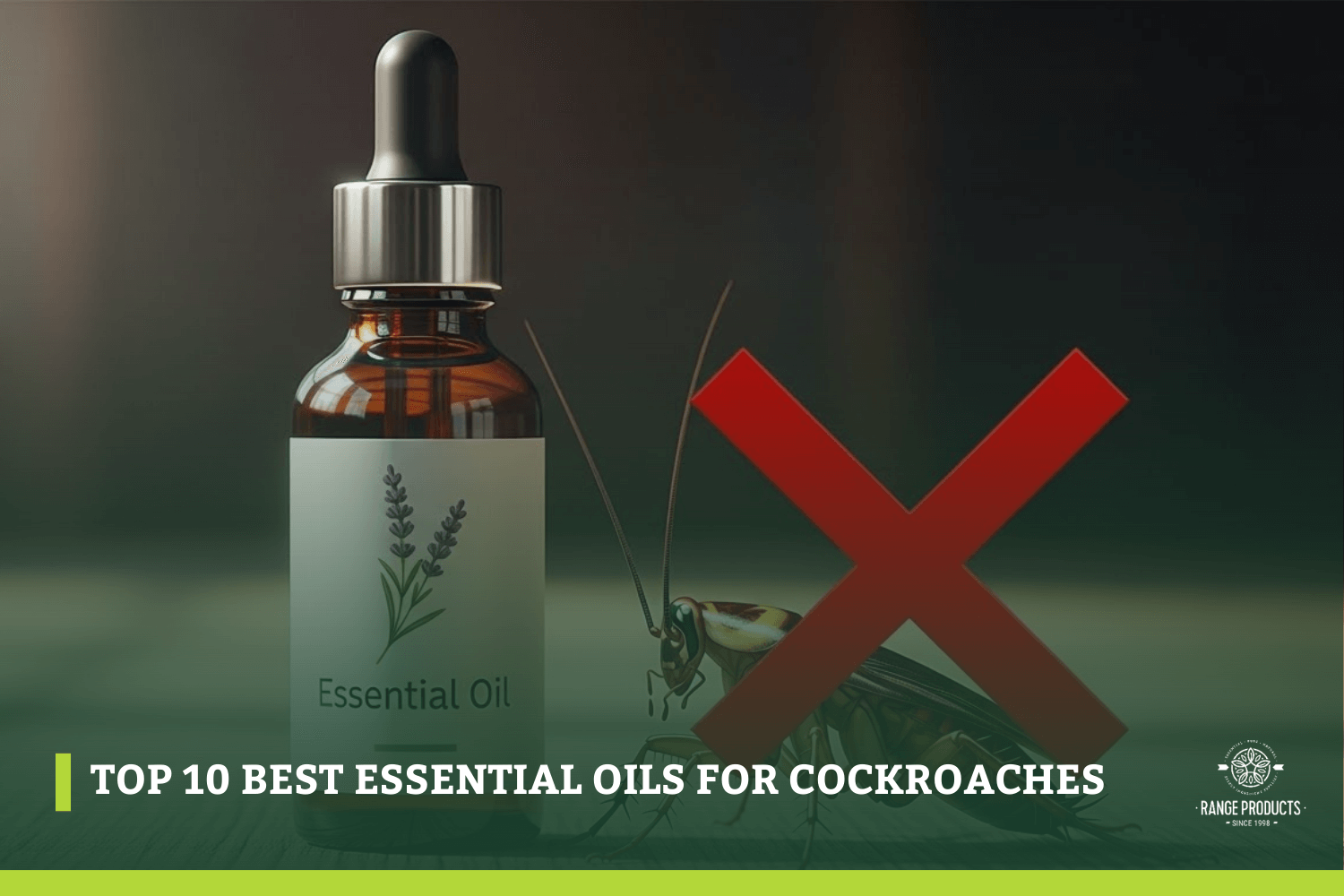
Cockroaches are nasty pests that contaminate your food, spread disease, and create genuinely unhygienic conditions in Australian homes. Essential oils for cockroaches offer natural alternatives to harsh chemical treatments that many people worry about using around children and pets. These plant-based solutions work by disrupting how pests navigate and triggering avoidance behaviours that keep cockroaches away from treated areas—they literally can’t stand the smell and leave.
Certain essential oils genuinely repel cockroaches, including German cockroaches (Blattella germanica), American cockroach species (Periplaneta americana), and brown-banded cockroach populations—the most common types infesting Australian homes. Range Products supplies 500+ premium essential oils and carrier products to help you create effective natural pest control solutions that actually work, not just smell pleasant, whilst cockroaches continue scurrying around your kitchen at night.
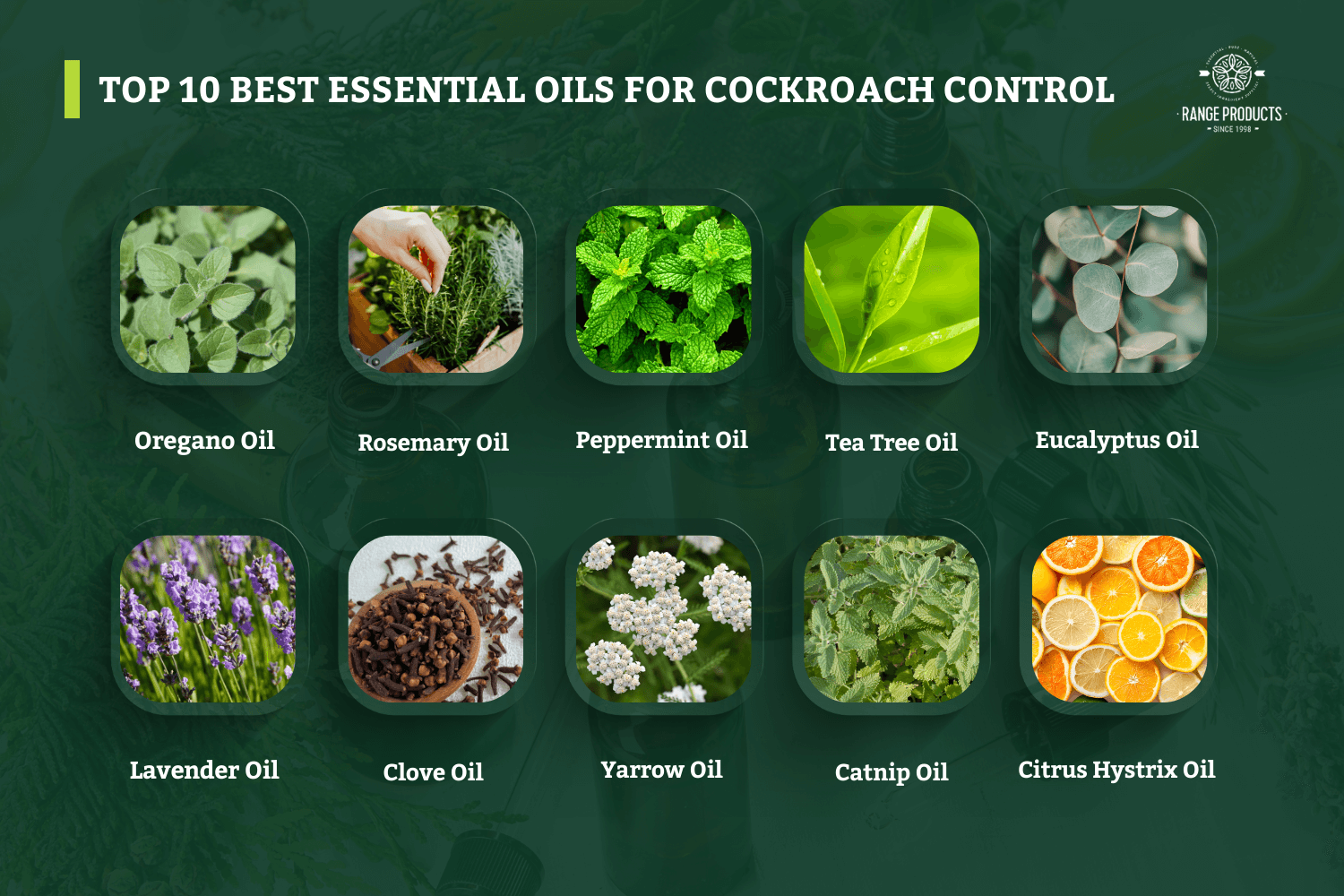
Top 10 Best Essential Oils for Cockroach Control
1. Oregano Oil
Oregano oil delivers powerful natural repellent properties for cockroaches with documented high efficacy in scientific studies. This potent extract from Origanum vulgare works immediately upon contact with pests, creating strong aromatic compounds that overwhelm cockroach sensory systems and trigger avoidance responses. Research shows oregano maintains its residual effects for at least one week on treated surfaces, making it one of the most effective essential oils for comprehensive cockroach control.
The oil causes mortality in cockroach nymphs whilst simultaneously repelling adult populations through its dual-action mechanism—killing young roaches and driving away mature ones. Apply oregano oil to hidden areas like cabinet interiors, behind appliances, and along baseboards where cockroaches congregate during daytime hours. Range Products supplies therapeutic-grade oregano essential oil in both retail and bulk quantities, with cold-pressed extraction that preserves the active compounds needed for maximum effectiveness against these persistent pests.
| Pros | Cons |
|---|---|
| ✅ Highest repellency rates among tested oils | ❌ Strong pungent smell some find unpleasant |
| ✅ Week-long residual effect reduces reapplication | ❌ Requires dilution before surface application |
| ✅ Works through multiple mechanisms simultaneously | ❌ May irritate skin without protective gloves |
| ✅ Non-toxic residues safe for food areas | ❌ Higher cost compared to common oils |
2. Rosemary Oil
Rosemary essential oil proves deadly effective against roaches through rapid contact action that disrupts pest nervous systems. This hydrodistilled extract from Rosmarinus officinalis contains camphor and cineole compounds that achieve complete mortality across various concentration ranges, making rosemary oil particularly effective in fumigation scenarios for treating cupboards and storage spaces where cockroach activity occurs.
The repellent properties keep cockroaches away from treated zones whilst the toxic effects eliminate existing populations through this powerful combination approach. Low human toxicity supports residential use in bathrooms and laundries where humidity attracts pests, with the pleasant herbal scent making this option more acceptable than pungent alternatives for living spaces.
| Pros | Cons |
|---|---|
| ✅ Complete contact mortality at all tested levels | ❌ Strong herbal scent may overwhelm small rooms |
| ✅ Excellent fumigant for enclosed space treatment | ❌ Requires proper ventilation after fumigation |
| ✅ Low toxicity profile for household use | ❌ More expensive than basic carrier oils |
| ✅ Pleasant aroma compared to harsh chemicals | ❌ Limited availability during seasonal shortages |
3. Peppermint Oil
Peppermint oil works as an effective cockroach deterrent natural through its intense menthol content that creates strong scent barriers. This extract from Mentha piperita repels roaches immediately with sharp aroma that masks food attractants drawing pests into kitchens and pantries. Research at Auburn University confirmed peppermint kills American and German roaches through fumigation exposure, making essential oils like peppermint practical DIY solutions for homeowners.
Mix 10-15 drops with water or vinegar in 500ml spray bottles for easy application around sinks, stoves, and food storage areas where pests concentrate. The volatile compounds evaporate relatively quickly, requiring reapplication every 3-4 days to maintain protective zones. Range Products stocks pharmaceutical grade peppermint suitable for both spray applications and diffuser use, providing ongoing repellency through aerial dispersion in treated rooms.
| Pros | Cons |
|---|---|
| ✅ Fresh pleasant scent for indoor applications | ❌ Requires frequent reapplication every few days |
| ✅ Readily available and affordable option | ❌ Lower mortality rates compared to oregano |
| ✅ Safe for use in food preparation zones | ❌ Can cause skin irritation without dilution |
| ✅ Works well in diffusers for passive protection | ❌ Evaporates faster than heavier oil compounds |
4. Tea Tree Oil
Tea tree oil leverages Australia’s native medicinal plant properties for tea tree oil cockroaches solutions that work effectively. This Melaleuca alternifolia extract produces strong scent overwhelming roach sensory systems, functioning primarily through repellency rather than direct toxicity. Mix tea tree oil with water or vinegar for practical spray applications in bathrooms and kitchens where moisture attracts pests.
As an Australian native, tea tree represents locally-sourced pest control perfectly suited to our climate and common cockroach species. Range Products specialises in tea tree oil harvested from New South Wales plantations using cold-pressed methods, with organic certified options eliminating pesticide residues whilst preserving maximum biological activity. Reapply every 2-3 days to maintain adequate volatile compound concentrations that keep roaches away from treated zones.
| Pros | Cons |
|---|---|
| ✅ Australian native with local sourcing benefits | ❌ Toxic to cats if ingested orally |
| ✅ Strong medicinal properties deter multiple pests | ❌ Limited direct killing power alone |
| ✅ Cold-pressed options preserve active compounds | ❌ Requires combination with other methods |
| ✅ Pleasant clean scent for most users | ❌ Must reapply frequently for effectiveness |
5. Eucalyptus Oil
Eucalyptus oil provides moderate repellent effects using Australian native plant compounds that deter cockroaches effectively. This extract from Eucalyptus species contains eucalyptol affecting roach nervous systems, working best in fumigation applications where vapour concentration builds in enclosed spaces. Apply eucalyptus spray to entry points including door thresholds, window frames, and ventilation areas where roaches access homes.
The fresh clean scent proves more pleasant than pungent alternatives for living areas and bedrooms, making eucalyptus oil suitable for spaces where occupant comfort matters. Use eucalyptus oil with other essential oils in combination blends to balance effectiveness with aroma profiles. Range Products maintains extensive eucalyptus inventory across multiple chemotypes, with local Eucalyptus globulus and Eucalyptus radiata varieties providing economical options with established supply chains throughout Australia.
| Pros | Cons |
|---|---|
| ✅ Australian native plant with local availability | ❌ Lower repellency compared to oregano or rosemary |
| ✅ Pleasant fresh scent suitable for living spaces | ❌ Requires higher concentrations for effectiveness |
| ✅ Economical option with established supply chains | ❌ May cause respiratory irritation in sensitive people |
| ✅ Works well in combination with other oils | ❌ Less research on cockroach-specific applications |
6. Lavender Oil
Lavender essential oil masks scent trails and overwhelms roach antennae whilst remaining pleasant for humans through its calming properties. This Lavandula angustifolia extract contains linalool creating chemical barriers without killing pests outright, making lavender essential oil ideal for prevention strategies. Mix five drops lavender with peppermint oil and water for enhanced spray solutions, or place cotton balls soaked in oil at baseboards and behind furniture.
The calming properties for humans contrast sharply with repellent effects on cockroaches who avoid treated zones actively, preventing accumulation of dead insects that might attract secondary pests. Range Products supplies French and Bulgarian lavender varieties with French options containing higher linalool preferred for pest applications. Layer lavender treatment with more toxic oils like rosemary in multi-stage programmes, with pleasant floral aroma making this option ideal for bedrooms where comfort matters.
| Pros | Cons |
|---|---|
| ✅ Pleasant floral scent humans enjoy | ❌ Does not kill roaches directly |
| ✅ Masks trails effectively to prevent navigation | ❌ Requires frequent reapplication for persistence |
| ✅ Safe for use in bedrooms and living areas | ❌ Less potent than oregano or rosemary options |
| ✅ Works well in combination formulas | ❌ Higher cost for quality therapeutic grade |
7. Clove Oil
Clove oil achieves rapid knockdown effects through powerful eugenol content that causes contact toxicity. This Syzygium aromaticum extract prevents proper nerve transmission in roaches, delivering mortality within 30 minutes of application at proper concentrations. Complete fumigant effects occur at relatively low doses making clove suitable for enclosed space treatments in areas where roaches hide.
Use clove in commercial kitchens, warehouses, and storage facilities where ventilation systems dilute concentrations from the intense aromatic profile. Range Products stocks food-grade clove bud oil meeting pharmaceutical standards for food handling premises, with the rapid action making clove valuable for acute infestation responses requiring immediate population reduction alongside other control methods.
| Pros | Cons |
|---|---|
| ✅ Fastest knockdown effect within 30 minutes | ❌ Very strong odour may be overwhelming indoors |
| ✅ High mortality rates at tested concentrations | ❌ Limited research on long-term residual effects |
| ✅ Food-grade options safe for kitchen use | ❌ Requires careful dilution before application |
| ✅ Works well in commercial settings | ❌ May irritate skin and respiratory system |
8. Yarrow Oil
Yarrow oil demonstrates strong mid-range performance for cockroach repellent applications with consistent effectiveness. This Achillea millefolium extract peaks at 5% concentration, with the hydrodistilled oil containing chamazulene and camphor interfering with roach sensory processing. Yarrow provides alternatives for facilities restricting chemical sprays due to safety regulations, with stable efficacy across multiple applications making it reliable for ongoing programmes.
Target areas where roaches aggregate including wall voids, underneath appliances, and accessible conduit spaces for best results. Range Products stocks yarrow extracted from European and North American sources with equivalent properties. Combine yarrow with complementary repellents like lavender for broader spectrum activity against multiple insect species, as the oil serves both prevention and active control functions simultaneously.
| Pros | Cons |
|---|---|
| ✅ Consistent effectiveness across applications | ❌ Less widely available than common oils |
| ✅ Works well at moderate concentrations | ❌ Limited consumer awareness and research |
| ✅ Suitable for restricted chemical environments | ❌ Slower action compared to clove or rosemary |
| ✅ Combines well with other essential oils | ❌ Higher price point for quality extracts |
9. Catnip Oil
Catnip oil outperforms DEET synthetic repellent against German cockroach populations through powerful natural compounds. This Nepeta cataria extract contains nepetalactone isomers producing harsh antennae impact whilst maintaining floral-minty aroma pleasant to humans. Research confirms sustained repellency during extended exposure periods, with the oil functioning primarily through deterrence rather than mortality making it suitable for perimeter treatments.
Apply catnip barriers around building foundations, garage thresholds, and basement access to create protective zones that keep cockroaches from entering buildings. Range Products provides concentrated catnip requiring dilution to 2-5% for practical spray applications. The documented superiority versus DEET positions catnip as compelling natural alternative, though domestic cats exhibit attraction to compounds that might complicate indoor applications in multi-pet households.
| Pros | Cons |
|---|---|
| ✅ More effective than DEET synthetic repellent | ❌ Attracts domestic cats complicating indoor use |
| ✅ Sustained repellency in research trials | ❌ Limited commercial availability in Australia |
| ✅ Pleasant scent for human occupants | ❌ Primarily repellent rather than lethal |
| ✅ Effective against German cockroaches specifically | ❌ Requires dilution from concentrated form |
10. Citrus Hystrix Oil (Kaffir Lime)
Citrus hystrix oil achieves complete laboratory repellency against German and American cockroaches with impressive real-world results. This Kaffir lime extract shows 86% field reduction in Thai trials, outperforming naphthalene controls in direct comparisons at equivalent densities. Limonene and citronellal compounds disrupt navigation whilst causing contact toxicity through exoskeleton degradation, with citronella oil-like properties providing familiar scent profiles.
Apply citrus hystrix to outdoor areas including patios, garages, and storage sheds where populations establish before moving indoors. Range Products imports pharmaceutical grade citrus hystrix from Southeast Asian sources with verified compound profiles. Use in combination with Australian natives like tea tree for geographically diverse formulations, as field testing validates laboratory findings demonstrating real-world effectiveness for natural cockroach repellents.
| Pros | Cons |
|---|---|
| ✅ Complete lab repellency against major species | ❌ Limited Australian availability requires imports |
| ✅ Field-tested results validate effectiveness | ❌ Week-long residual requires regular reapplication |
| ✅ Pleasant citrus scent for all applications | ❌ Higher cost due to international sourcing |
| ✅ Works well outdoors and indoors | ❌ Less research compared to common oils |
Essential Oil Application Comparison
| Application Method | Best Oils | Frequency | Coverage | Best For |
|---|---|---|---|---|
| Surface Spray | Oregano, peppermint, tea tree | Every 3-7 days | Wide areas | Kitchens, bathrooms |
| Cotton Ball Placement | Rosemary, lavender, clove | Weekly | Targeted spots | Cabinets, drawers |
| Fumigation | Rosemary, clove, eucalyptus | Monthly | Enclosed spaces | Cupboards, storage |
| Diffuser | Peppermint, lavender, eucalyptus | Daily when active | Room-wide | Living areas |
| Perimeter Barrier | Catnip, citrus hystrix, oregano | Weekly | Entry points | Doors, windows |
Range Products | Your Essential Oil Source
Essential oils for pest control applications require high-quality sourcing that preserves active compounds. Range Products offers 500+ premium essential oils suitable for natural cockroach repellents and other pest management needs. Our Australian operations provide fast shipping whilst maintaining competitive pricing across retail and bulk quantities. Australian-sourced tea tree and eucalyptus support local agriculture whilst reducing transportation impacts.
Cold-pressed extraction methods we specify preserve heat-sensitive compounds that degrade during conventional processing. Therapeutic grade selections ensure maximum concentration without adulterants reducing effectiveness. Organic certified options eliminate pesticide residues that might compromise biological activity or introduce additional concerns.
Top 10 Best Essential Oils for Cockroaches FAQs
Can you mix essential oils with other essential oils for better results?
Yes, combining different essential oils creates synergistic effects that enhance overall effectiveness beyond individual components. Popular combinations include oregano with rosemary for maximum mortality, or peppermint with lavender for balanced repellency and pleasant scent. Limit mixtures to 3-4 oils maximum to enable troubleshooting if efficacy declines. Range Products maintains extensive inventory enabling custom blend creation for specific pest scenarios with technical support available for formulation optimisation.
Which essential oil is another good option for sensitive areas?
Lavender represents the safest choice for sensitive environments including bedrooms and nurseries due to its non-toxic nature and calming human effects. The oil provides moderate repellency through scent trail masking without harsh chemical properties. For kitchen applications where food safety matters, use peppermint or tea tree which hold food-grade status. These options balance effectiveness with reduced risk profiles suitable for areas with vulnerable occupants or frequent human contact.
Do essential oils for cockroach control work as well as professional pest control services?
Essential oils offer a natural pest control method that handles light to moderate infestations effectively when applied correctly and consistently. They excel at prevention and ongoing maintenance but severe established populations may require professional pest control efforts combining multiple approaches. Many pest control expert services now incorporate botanical solutions alongside traditional methods for integrated programmes. For best results, use essential oils as part of comprehensive pest control routine addressing sanitation, exclusion, and environmental modifications rather than relying solely on any single treatment method.
Back to Top: Top 10 Best Essential Oils for Cockroaches | Natural Solutions That Actually Work