100+ Google reviews




A warm bath transforms into therapeutic aromatherapy when you add essential oils and oil blends. Pure essential oils deliver concentrated plant compounds that promote relaxation, ease tension and nourish skin when properly diluted and added to bath water. Whether seeking bathtime bliss after a stressful day or the best essential oils for detox bath support, understanding how to use essential oils safely makes all the difference.
This guide explores what are the best essential oils for bath, how to create aromatherapy bath oil blends and which combinations work best for specific needs. From calming lavender oil to invigorating eucalyptus, you’ll discover how to blend oils properly with carrier oil and transform bath time into premium essential oil experiences.
What Are Essential Oil Blends for Bath?
Essential oil blends combine two or more pure essential oils to create therapeutic effects greater than single oils provide alone. When you blend oils strategically, complementary compounds work together.
For example, calming properties meet pain relief, or skin nourishment pairs with mental clarity. Bath blends address multiple needs simultaneously, like combining lavender, geranium and chamomile to target both physical tension and mental stress.
The key to effective bath blends lies in proper dilution. Essential oils don’t dissolve in water; they float on the surface and can cause skin irritation if applied undiluted. This is where carrier oil becomes essential. Sweet almond oil, jojoba or fractionated coconut oil dilute the essential oil before adding to your bath. These vegetable oils also nourish skin while helping essential oils disperse through bath water.
A typical bath blend formula includes 5 to 10 drops of essential oil mixed with 1 to 2 tablespoons of carrier oil. Some homemade bath recipes also incorporate bath salts, which help disperse oils and add minerals. Always mix the carrier oil before adding it to the bath to ensure essential oils spread throughout the water.
The Benefits of Aromatherapy Oils for Bath
Aromatherapy harnesses the healing properties of essential oils to influence physical and emotional well-being. When you add aromatherapy oils to a warm bath, aromatic compounds enter your body through inhalation and skin absorption simultaneously, making aromatherapy bath experiences particularly effective.
Warm water opens pores, allowing essential oils to penetrate skin more effectively. Steam carries aromatic molecules to your olfactory system, which connects to the brain’s limbic system—the area governing emotions and stress responses. This explains why certain scents instantly shift mood or trigger relaxation.
For mental well-being, aromatherapy bath oils reduce stress hormones and calm nervous system responses. Oils like lavender, chamomile, and geranium promote relaxation and support restful sleep when used before bedtime. Oils like eucalyptus, peppermint, and citrus varieties energise and clarify mental fog.
Physical benefits include muscle relaxation, improved circulation, and skin care advantages. Eucalyptus and peppermint provide cooling sensations that soothe sore muscles. The antibacterial properties of oils like tea tree may support skin health, while bath oil blends prevent dryness from frequent bathing.
What Are the Best Essential Oils for Bath Use?
Selecting the best essential oils for bath depends on your skin type, desired effect and safety considerations. Your goal determines which oils to use.
Best Essential Oils by Purpose
For Relaxation and Sleep
Lavender oil stands as the most popular choice for promoting relaxation and restful sleep, as its calming compounds reduce nervous tension. Chamomile provides gentle sedative properties that soothe anxiety. Geranium balances emotions with its floral scent. These create excellent aromatherapy blends for evening baths.
For Energy and Mental Clarity
Eucalyptus delivers invigorating effects that open airways and refresh the mind. Its scent stimulates mental alertness while soothing muscle tension. Peppermint energises and cools simultaneously with its menthol content. Orange essential oil and other citrus oils uplift mood, excellent for morning baths. Remember, citrus oils are photosensitive, so avoid sun exposure after use.
For Detoxification
Tea tree offers powerful antibacterial properties for purification. This is among the best essential oils for detox bath formulations. Juniper berry supports detoxification with a woodsy, grounding scent. Rosemary stimulates circulation and natural detoxification processes.
For Skin Nourishment
Lavender, geranium and chamomile all soothe skin beyond their aromatherapy effects. These oils calm irritated skin when properly diluted in carrier oil.
Ready-to-Use Bath Blends
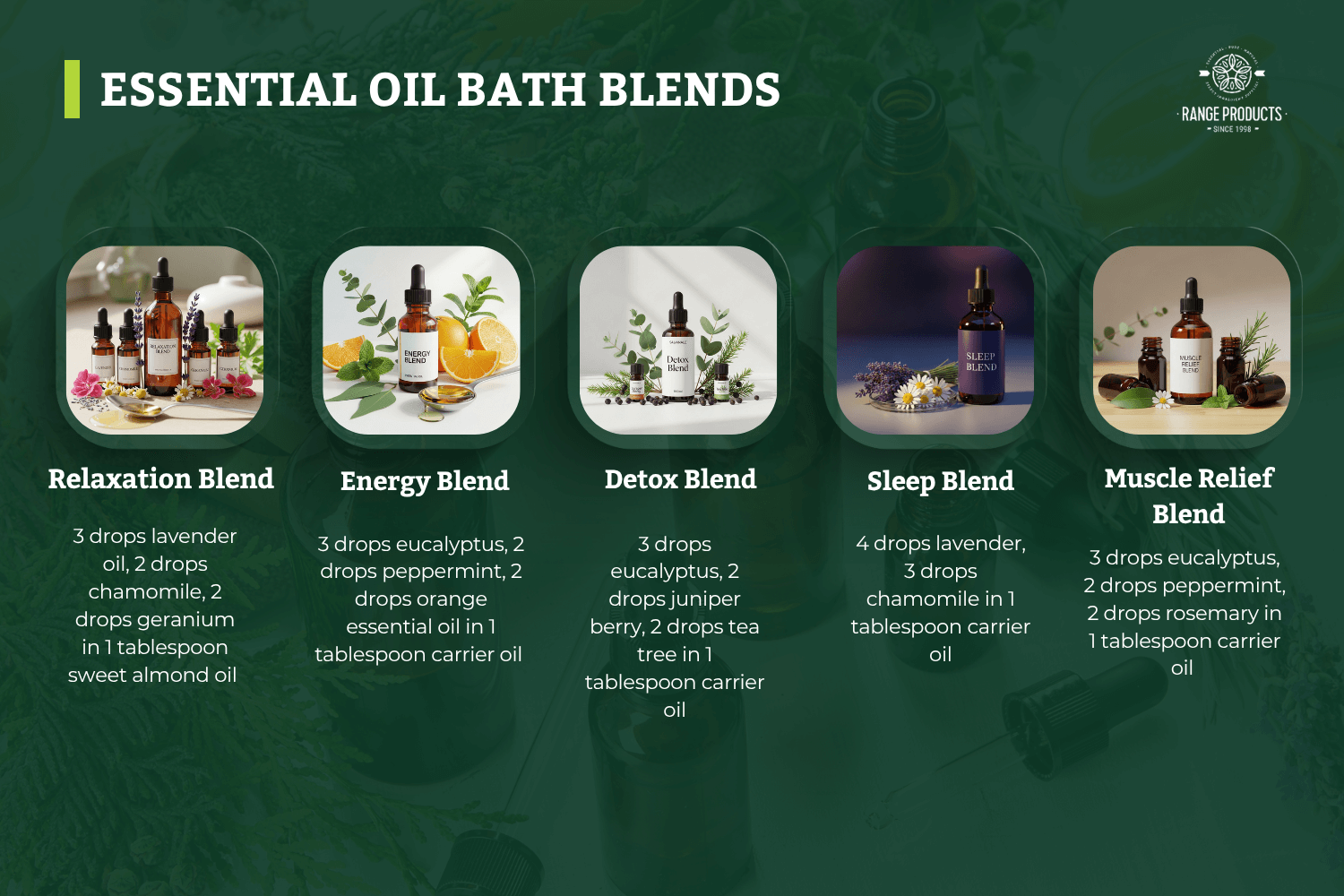
- Relaxation Blend: 3 drops lavender oil, 2 drops chamomile, 2 drops geranium in 1 tablespoon sweet almond oil
- Energy Blend: 3 drops eucalyptus, 2 drops peppermint, 2 drops orange essential oil in 1 tablespoon carrier oil
- Detox Blend: 3 drops eucalyptus, 2 drops juniper berry, 2 drops tea tree in 1 tablespoon carrier oil
- Sleep Blend: 4 drops lavender, 3 drops chamomile in 1 tablespoon carrier oil
- Muscle Relief Blend: 3 drops eucalyptus, 2 drops peppermint, 2 drops rosemary in 1 tablespoon carrier oil
These oil blends for baths are starting points. Adjust drops of essential oil according to personal preference and sensitivity.
How to Use Essential Oils in Your Bath Safely
Using oils in the bath requires proper technique to maximise benefits while preventing irritation. Essential oils can cause skin reactions if not used correctly, so make sure you get this right.
Proper Dilution Method
Never add essential oils directly to your bath water. Instead, always dilute the essential oil in carrier oil first. Mix 5 to 10 drops of essential oil with 1 to 2 tablespoons of carrier oil (sweet almond oil, jojoba or other vegetable oils). Stir thoroughly. Add this mixture to your bath after filling the tub, then swirl the water to disperse the oils.
Alternative dispersal methods include mixing your chosen essential oil blend with bath salts (use 1/4 to 1/2 cup with 5 to 10 drops of essential oil), adding a few drops to unscented bubble bath, or mixing drops of essential oil into 1/4 cup milk before adding to your bath.
Safety Guidelines
- Dilution Ratios: For a standard bath, use 5-10 drops of essential oil in 1 to 2 tablespoons of carrier oil. Sensitive individuals should start with 3 to 5 drops.
- Children: Use half the adult dilution for children over 6 years, only 2 to 3 drops of gentle oils like lavender for children under 6. Avoid peppermint and eucalyptus for children under 10.
- Pregnancy: Pregnant women should consult healthcare providers before using essential oils. Many oils are contraindicated during pregnancy.
- Photosensitivity: Lemon essential oil, orange and other citrus oils make the skin sensitive to the sun. Avoid sun exposure for 12 hours after baths containing these oils.
- Duration: Limit aromatherapy bath time to 15 to 20 minutes. Fill tubs with warm (not hot) water.
Creating DIY Bath Oil Recipes
Making homemade bath oil blends allows you to customise aromatherapy products for your needs while ensuring quality control.
Standard Bath Oil Blend:
- 1 to 2 tablespoons carrier oil
- 5 to 10 drops total of essential oils
- Optional: 1/4 cup bath salts
Mix carrier oil with your chosen essential oils. For bath salts, combine all ingredients and store in an airtight container. Add to the running bath water.
Recipe Ideas
- Evening Relaxation: 1 tablespoon of sweet almond oil, 4 drops of lavender, 3 drops of chamomile, 2 drops of geranium, perfect to promote relaxation before restful sleep.
- Morning Energy: 1 tablespoon of carrier oil, 3 drops of eucalyptus, 3 drops of peppermint, 2 drops of orange essential oil, invigorates and refreshes.
- Detox Bath: 1 tablespoon of carrier oil, 1/4 cup of Epsom bath salts, 3 drops of eucalyptus, 3 drops of juniper berry, 2 drops of tea tree, supports purification.
- Muscle Soak: 1 tablespoon of carrier oil, 4 drops of eucalyptus, 3 drops of peppermint, 2 drops of rosemary, helps soothe sore muscles.
DIY Tips:
Use premium essential oils from reputable suppliers, because the healing properties of essential oils depend on purity. Label bath blends with ingredients and creation date. Store homemade bath products in dark glass bottles away from heat and light, and keep notes on which oil recipes work best.
You can also use essential oils in your diffuser while bathing to enhance the aromatherapy experience, or create massage oils using the same blends at higher concentrations for post-bath application.
Safety Considerations and Best Practices
While aromatherapy bath oils offer benefits, improper essential oil use can lead to adverse reactions. Essential oils can cause skin irritation when undiluted or trigger allergic reactions in sensitive individuals. Always use a carrier oil to dilute essential oils before adding to bath water.
- Common Safety Issues: Perform patch tests with new oils. If bath water with essential oils contacts eyes, rinse with carrier oil (not water). Citrus and some other essential oils make skin more sensitive to the sun.
- Special Populations: Many essential oils aren’t safe during pregnancy, so consult healthcare providers beforehand. Use oils sparingly with children at reduced dilutions. Those with medical conditions should consult providers before using essential oils.
- Best Practices: Always dilute. Use quality pure essential oils from reputable suppliers and store the oils in dark glass bottles away from heat and children. Clean tub surfaces after use, because bath oils can make surfaces slippery. When uncertain, seek guidance from a qualified aromatherapist.
Essential Oil Blends for Bath FAQs
What are the best essential oils for bath?
The best essential oils for bath depend on your needs. For relaxation and restful sleep, use lavender oil, chamomile and geranium. For energy, choose eucalyptus, peppermint and citrus oils like orange essential oil.
For detoxification, eucalyptus, juniper berry and tea tree are among the best essential oils for detox bath blends. Always dilute essential oils in a carrier oil like sweet almond oil before adding to bath water.
Can I use essential oils in a bubble bath?
Yes, add essential oils to bubble bath by mixing a few drops into unscented bubble bath products before adding to water. Use 5 to 8 drops of essential oil per cup of bubble bath base. This helps emulsify and disperse the essential oils safely.
Are essential oils safe for children’s baths?
Essential oils can be used in children’s baths with precautions. Use only gentle oils like lavender and chamomile for children over 6 years at half the adult dilution (2 to 5 drops in carrier oil). For children under 6, use only 1 to 3 drops. Avoid eucalyptus, peppermint, and tea tree for children under 10. Always use essential oils diluted in a carrier oil.
Can essential oils cause skin reactions in the bath?
Yes, essential oils can cause irritation if they’re not properly diluted. Always dilute essential oils in a carrier oil before adding to bath water. Perform patch tests with new oils. If irritation occurs, exit the bath and rinse with carrier oil. Citrus oils can make skin sensitive to the sun, so avoid sun exposure for 12 hours after using these oils in your bath.
Back to Top: Essential Oil Blends for Bath