Irritated skin needs gentle care because a compromised barrier reacts faster and recovers slower under stress. Redness, itching, tightness, and flare-ups often appear after exposure to cold air, heat, allergens, or unsuitable skin care products.

These signs show weakened skin cell function and reduced moisture retention, which increases sensitivity over time. Strong actives and synthetic fragrances can worsen inflammation and prolong discomfort instead of resolving it.

For that reason, many people now explore natural essential oils to soothe irritation while supporting skin health. This article explains the best essential oil options for calming reactive skin, how to use essential oil safely through correct dilution, and when essential oils may not suit certain skin conditions.

What Causes Irritated Skin?

what causes irritated skin

Irritated skin develops when environmental and lifestyle stressors overwhelm your skin’s protective barrier. Harsh sun and ultraviolet exposure, heat and humidity, dry indoor air during winter, chlorine from pools, and city air pollution can strip your skin of its moisture and disrupt balance.

Daily habits such as over-exfoliating, taking hot showers, using fragranced body washes, shaving frequently, or wearing tight clothing add further strain. When the barrier weakens, moisture escapes more easily and irritants penetrate faster, which leads to redness, burning sensations, or itching.

Some lipid-rich plant oils can support barrier repair and hydration, while certain essential oils or fragranced oils may irritate already compromised skin and require careful selection and dilution.

What Makes an Essential Oil Good for Irritated Skin?

A good essential oil for irritated skin supports comfort without increasing sensitivity. Oils chosen to soothe, reduce inflammation, and feel gentle on contact tend to suit reactive areas more effectively.

Some popular options, particularly certain cold-pressed citrus oils and strongly spiced varieties, can irritate fragile skin or trigger phototoxic reactions when exposed to sunlight. During flare-ups, that risk makes careful selection especially important.

Pairing an essential oil with a nourishing carrier oil lowers irritation potential and improves application. Options such as jojoba oil or almond oil help buffer potency, which matters for sensitive skin that reacts quickly to concentrated ingredients.

Best Essential Oils for Irritated Skin

The best essential oils for skin irritation focus on calming discomfort without overwhelming a weakened barrier.

Options chosen for their gentle, soothing properties can help settle redness and support skin comfort when used correctly. Selection depends on your skin type, current sensitivity, and proper dilution, since some oils suit reactive skin better than others.
best essential oils for irritated skin

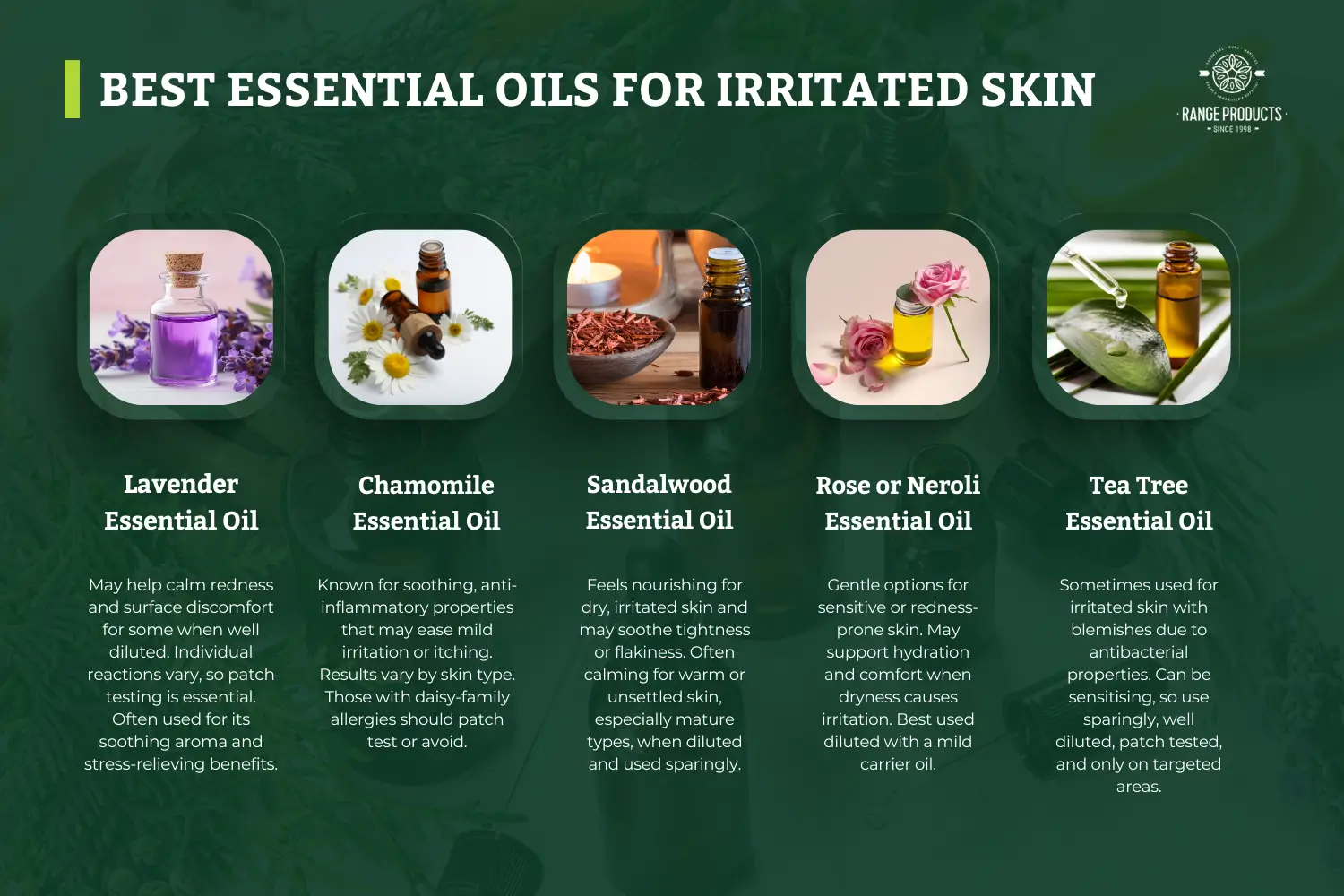
Lavender Essential Oil

Lavender essential oil may help calm redness and ease surface discomfort for some people with irritated skin when used correctly.

Some individuals with eczema or itchy skin find it soothing, while others may experience irritation, which makes individual response unpredictable. Its aroma is widely used in aromatherapy and may help reduce stress that can worsen flare-ups.

This essential oil can be suitable for some sensitive skin types when well diluted and patch tested first. Blending lavender oil with a gentle carrier oil supports safer application and better skin comfort.

Chamomile Essential Oil (Roman or German)

Chamomile essential oil is often chosen for irritated skin because it has recognised soothing properties and may help reduce inflammation for some people.

Those with itchy skin, mild rash, or visibly inflamed skin sometimes report comfort when the oil is carefully diluted and applied to a small area.

People with eczema or dry patches may find it calming, though results differ by skin type and sensitivity level. This essential oil comes from plants in the daisy family, so anyone with related allergies should patch test first or avoid use entirely.

Sandalwood Essential Oil

Sandalwood essential oil is a good option for dry skin because it feels deeply nourishing and supportive during irritation. It may help soothe discomfort linked to tightness, flakiness, or a rough surface, especially when your skin lacks moisture.

Some people find this essential oil calming for irritated skin that feels warm or unsettled. Its richer profile makes it a useful option for mature skin when blended with a suitable carrier oil and applied sparingly.

Rose or Neroli Essential Oil

Rose essential oil and neroli essential oil are popular choices for irritated skin that reacts easily or shows visible redness. Their gentler profile means they may soothe discomfort without overwhelming a compromised barrier.
Hydration support is another reason some people reach for these oils. For those with sensitive skin, they can feel more comfortable in daily skin care routines when dryness contributes to irritation. Proper dilution with a mild carrier oil also makes them a suitable option for ageing or dehydrated skin.

Tea Tree Essential Oil (Use With Care)

Tea tree essential oil is sometimes used when irritated skin appears alongside breakouts or minor blemishes. In those situations, its antibacterial nature can be helpful.

Tea tree oil can irritate or sensitise some people, especially when the skin is already inflamed. Safe use requires careful dilution, patch testing, and restraint. Applying tea tree essential oil only to small, targeted areas with a gentle carrier oil reduces the risk of further irritation.

Best Carrier Oils for Irritated or Sensitive Skin

You should never apply essential oils on your skin without diluting them first because essential oils are highly concentrated and can cause irritation when used neat. The choice of carrier oil matters because it buffers potency and supports the skin barrier at the same time.

Here are two popular carrier oils:

  • Jojoba oil is highly skin-compatible, absorbs easily, and suits most skin types.
  • Almond oil is richer, contains vitamin E, and can feel especially comforting on dry skin or irritated patches.

For sensitive skin, a safe approach is to dilute essential oils to about 0.5 to 1%, which equals one to two drops of essential oil per teaspoon of carrier oil.

How to Use Essential Oils Safely on Irritated Skin

Using essential oils on your skin safely matters most when irritation or sensitivity is already present. Essential oils are highly concentrated, so careful preparation and restraint protect fragile skin from further stress.

Follow these patch test steps before wider use:

  • Dilute essential oils with a gentle carrier oil to the appropriate strength.
  • Apply a small amount to the inner arm.
  • Wait 24 hours and check for redness, itching, or discomfort.

Simple blends can support comfort when used thoughtfully:

  • Create a soothing face oil for sensitive skin by blending lavender essential oil or chamomile essential oil with jojoba oil.
  • Mix a calming body oil after sun exposure using lavender oil and sandalwood essential oil in almond oil.

Always avoid the eyes, mucous membranes, and heavily broken or weeping area of skin. Stop use immediately if burning, stinging, or increased redness develops, as essential oils may irritate compromised skin even when diluted.

Best Essential Oil for Irritated Skin | FAQs

Can I use essential oils on irritated skin every day?

Daily use isn’t always advisable for reactive skin. Starting with two to three times per week allows you to monitor how your skin responds before increasing frequency. During active flare-ups, even less frequent application may be safer.

How long does it take for essential oils to calm irritated skin?

Some people notice immediate comfort from the cooling or soothing sensation, while actual skin improvement typically takes consistent use over one to two weeks. If irritation worsens or doesn’t improve within that time, discontinue use and consult a dermatologist.

Can I mix multiple essential oils together for irritated skin?

Yes, but keep blends simple when dealing with sensitivity. Combining two gentle oils like lavender and chamomile is generally safer than complex multi-oil formulas. More ingredients mean more potential irritants, so restraint works in your favour.

Should I avoid essential oils during an active eczema or psoriasis flare?

Many dermatologists recommend avoiding all essential oils during acute flares when your skin barrier is severely compromised. Once the flare settles and skin begins healing, carefully diluted oils may be reintroduced with patch testing.

Back to Top: Best Essential Oil for Irritated Skin 

Essential oils are highly concentrated plant extracts, and even low doses can affect a pet’s skin, lungs, nervous system and internal organs. Exposure doesn’t require direct application. A dog or cat can inhale vapours, absorb residue through their skin, or ingest traces picked up from paws, bedding or furniture where oil has settled.

Some essential oils may be used cautiously around a dog, but many are risky for both species and especially for a cat. Cats have a reduced ability to process many compounds, while dogs can metabolise more but still face risk.

Safety depends on the specific essential oil, how people use essential oils, whether exposure occurs through air, skin or ingestion and the animal’s size, age and health.

In homes with dogs and cats, the safest approach is very limited use, strong ventilation and easy escape from scented spaces. When in doubt, skipping essential oils and asking a vet about safer alternatives supports better pet care.

Why Pets React Differently to Essential Oils

Pets react differently to essential oils because their bodies manage exposure in ways humans don’t. A pet doesn’t encounter oil in a single, controlled moment.

Instead, exposure builds through breathing scented air from a diffuser, through skin contact and through grooming after stepping on residue left on paws, bedding or furniture when people use essential oils indoors. This repeated contact matters because it increases the dose over time without anyone meaning to apply an essential oil directly.

Cats face the greatest risk. A cat has a reduced ability to process essential oils because cats lack the liver enzyme glucuronyl transferase, which is required to break down many plant compounds. As a result, substances found in essential oils can accumulate quickly in the body, even at low exposure levels, making serious illness more likely.

Dogs respond differently, but risk still exists. A dog can metabolise more of these compounds than a cat, which lowers the risk relative to cats but doesn’t remove it.

Oil absorbed through inhalation, skin contact, or grooming can still cause problems, especially with frequent indoor use. The difference between cats and dogs lies in metabolic capacity, not in whether exposure occurs.

Are Essential Oils Okay for Dogs?

Some essential oils can be used cautiously around a dog, but none are risk-free, and they should never replace veterinary care. Any decision to use essential oils needs professional input, proper dilution and a clear purpose, because even tolerated options can cause problems if misused.

Clear safety rules apply. Never put oil in your dog’s mouth, ears or eyes, and never apply oils directly to the coat or skin unless a veterinarian gives specific instructions. Pet owners should also keep all bottles, diffuser units and oil-containing products stored securely, because dogs may lick, chew or spill them out of curiosity.

DIY remedies deserve special caution. Flea or tick treatments made with essential oil blends often lack evidence and can lead to burns, irritation or toxicity. Individual response also varies widely. One dog may tolerate a scent, while another shows coughing, itching or lethargy, which is why slow introduction and immediate stopping matter for responsible pet care.

What Essential Oils Are Safe for Dogs?

No essential oils are completely safe for dogs, but some are more commonly tolerated when used correctly, sparingly and with veterinary guidance. These options apply to dogs only and refer to indirect use in the surrounding environment, not direct application.

what essential oils are safe for dogs

The essential oils most often cited as typically safer for dogs include:

  • Chamomile
  • Myrrh
  • Ginger
  • Rosemary
  • Bergamot
  • Frankincense

“Safer” doesn’t mean risk-free. Use only diluted forms, avoid ingestion and direct coat or skin application, and introduce scents slowly. Consult a veterinarian before regular essential oil use, because individual response varies and responsible pet care depends on how your dog reacts, not on lists alone.

Is Lavender Essential Oil Safe for Dogs?

Lavender is one of the most commonly recommended essential oils for dogs, but it still requires caution and professional guidance. Some veterinarians suggest lavender essential oil to support mild anxiety or restlessness in a dog, but this advice assumes correct dilution, limited exposure and informed oversight.

How you use essential oils matters. With lavender, this means very small amounts, properly diluted and released into the air rather than applied to the body. Oil should never be added to food or water, and you shouldn’t apply essential oils directly to a dog’s coat, paws or skin unless a veterinarian gives specific instructions.

Individual response varies. Some dogs react to lavender with redness, itching, drooling, coughing or unusual sleepiness, which shows why careful observation matters.
Stop use immediately and contact your veterinarian if adverse signs appear or if your dog licks or ingests the essential oil.

Are Essential Oils Ok for Cats?

Most veterinary and animal welfare organisations agree that essential oils are not safe for cats. A cat is highly sensitive to essential oils, and repeated exposure to essential oils increases risk even when amounts seem small. This applies to essential oils in your home, not just products placed near the animal.

Cats absorb compounds through normal behaviour. They breathe vapours when people diffuse essential oils, groom residue from fur and paws and come into contact with essential traces left on bedding or furniture.

Because of their sense of smell and limited metabolic capacity, essential oils may trigger harm quickly. Documented outcomes include liver injury, breathing distress, neurological signs and essential oil poisoning, with reported symptoms of essential oil poisoning ranging from drooling and tremors to seizures and collapse.

Some practitioners mention limited air-only use of oils like lavender or frankincense, but this remains rare and tightly controlled. For most homes, avoidance is the safest approach. When it comes to using essential oils, skipping them protects your beloved pet and supports responsible pet care.

Essential Oils That Are Not Safe for Pets

Certain essential oils are toxic and should not be used around pets, including both dogs and cats. These oils carry a higher risk because oils are made from highly concentrated plant material and even small exposure can be harmful.

High-risk essential oils to avoid include:

  • Tea tree oil
  • Eucalyptus
  • Wintergreen
  • Sweet birch
  • Pennyroyal
  • Clove
  • Cinnamon
  • Citrus oils such as lemon, orange and grapefruit
  • Ylang ylang
  • Pine
  • Camphor
  • Strong mint oils

These substances don’t appear only in small bottles. Many are found in cleaning sprays, air fresheners, laundry products, personal care items and “natural” flea or tick treatments, which increases exposure to essential oils inside the home. Pet owners should read labels carefully for ingredients such as melaleuca, menthol, phenols or citrus extracts, because essential oils can cause serious harm.

To reduce risk, keep essential oils and related products stored securely, place oils out of reach and prevent spills where animals may walk or groom. This reduces the chance of essential oil toxicity and supports safer pet care.

Signs Your Pet May Be Reacting to Essential Oils

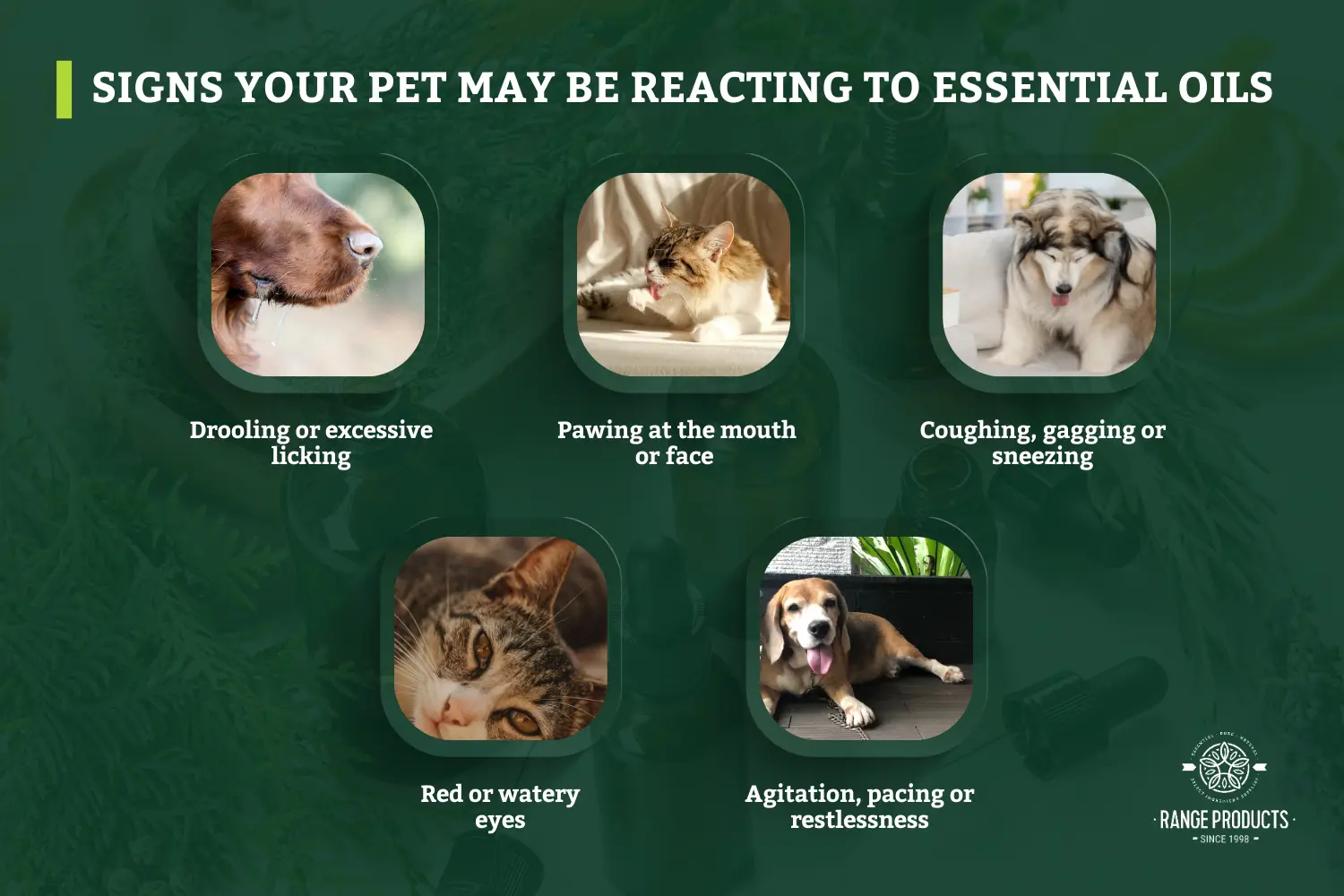
Reactions to essential oils can appear quickly and often start with subtle changes in behaviour. Early signs include drooling, pawing at the mouth, coughing, gagging or sneezing, along with red or watery eyes and restlessness. Some animals also try to escape the source of scent, which matters because a pet’s sense of smell is far more acute than a human’s.

signs your pet may be reacting to essential oils

Common early indicators include:

  • Drooling or excessive licking
  • Pawing at the mouth or face
  • Coughing, gagging or sneezing
  • Red or watery eyes
  • Agitation, pacing or restlessness

More serious signs suggest essential oil poisoning and require urgent attention. These can include vomiting, diarrhoea, wobbliness, muscle tremors, marked lethargy, collapse or seizures. Skin exposure may cause redness, rashes or burns where the oil touched fur, paws or a cleaned surface.

If you suspect exposure to essential oils, act immediately. Turn off any diffuser, remove access to the product and contact your veterinarian or the pet poison helpline, especially if the animal is a cat.

Are Essential Oils Ok for Dogs and Cats? FAQs

Can essential oils affect pet birds, rabbits, or other small animals?

Yes, often more severely than cats or dogs. Birds have extremely sensitive respiratory systems, and small mammals can be highly susceptible to airborne toxins. If you have any small pets, essential oil diffusers should generally be avoided entirely in shared living spaces.

How long should I wait after diffusing essential oils before letting my pet back into the room?

Allow at least two to four hours with windows open for thorough ventilation. Even after the scent fades to human noses, residue can linger on surfaces and in the air at levels pets can still detect and absorb.

Can I use essential oil-based cleaning products if I have pets?

Use them with caution. Wipe surfaces thoroughly after cleaning and ensure they’re completely dry before pets have access. Floors are particularly risky since pets walk on them and then groom their paws. Switching to pet-safe cleaning alternatives is the most reliable option.

Back to Top: Are Essential Oils Ok for Dogs and Cats? What Pet Parents Need to Know 

Summer calls for lighter, fresher scent experiences that echo open windows, blue skies and slow mornings. Essential oil aromas can set the tone for the day, creating energising starts, breezy afternoons and calm evenings as the heat fades.

On long summer days, people often gravitate toward citrus, minty and herbaceous notes, softened by gentle florals and pale woods. Bright lemon, juicy grapefruit and sunny bergamot feel vibrant, while lavender and ylang ylang bring ease. These essential oils suit an essential oil diffuser, handmade soap and simple body care, letting one blend carry the feeling of summer through every space.

Essential Oils That Shine in Summer

Certain essential oil selections feel more aligned with warm weather because heat and airflow influence how an aroma moves through a space. Lighter profiles travel easily across open rooms, creating a fresh presence that avoids heaviness.

Many oils from peels, leaves and woods work especially well in open, well-ventilated homes, which suits relaxed summertime living. When chosen with care, each essential option can help uplift, energise or soothe the mood for many people as temperatures rise.

This seasonal approach supports everyday wellness and reflects the spirit of the season without leaning on dense fragrance styles.

Essential Oil Diffuser Blends for Summer

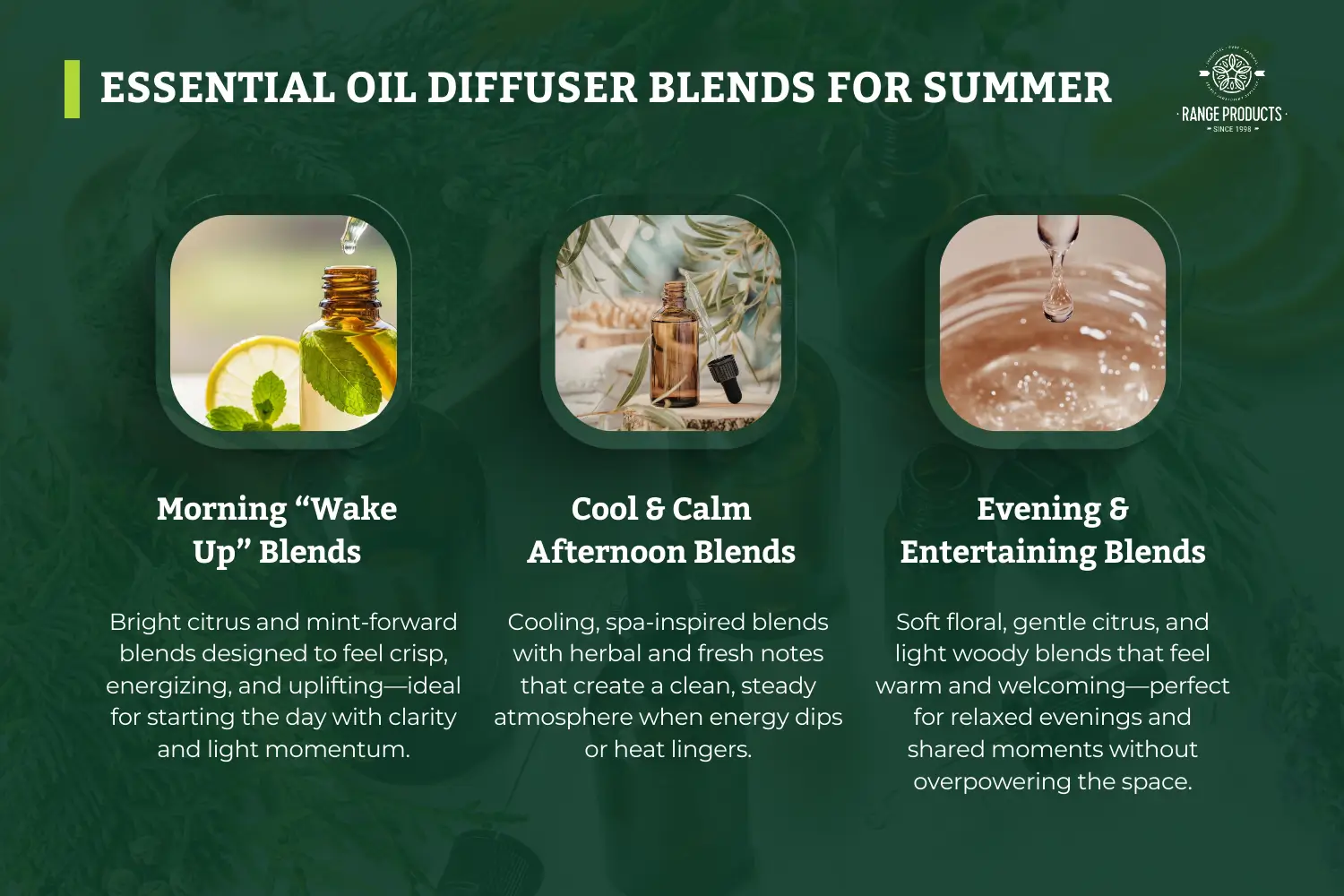
Diffusing brings a light, seasonal feel indoors by freshening the air and shaping the atmosphere through aroma. A well-chosen diffuser blend can make rooms feel brighter, calmer or cooler during warm weather. This simple ritual suits everyday living and adds a subtle summer tone to shared spaces.

essential oil diffuser blends for summer

Morning “Wake Up” Blends

Morning essential oil blends focus on clarity and momentum, helping spaces feel awake from the first light. Bright citrus notes paired with minty accents create an aroma that feels crisp and motivating without heaviness.

In an essential oil diffuser, try a simple mix using two drops of lemon, two drops of sweet orange and one drop of peppermint. This blend can suit early routines, may help support focus for many people, and brings a fresh summer feeling indoors from the start of the day.

Cool & Calm Afternoon Blends

Afternoon essential oil blends suit moments when heat lingers and energy dips. Cooling, spa-like aromas create a calmer atmosphere that feels clean and steady rather than heavy. In an essential oil diffuser, combine two drops of eucalyptus, two drops of lavender, one drop of rosemary and one drop of lemon for a balanced blend. This option works well in a home office, shared living areas or after a hot day, bringing a softer summer tone into the space.

Evening & Entertaining Blends

Evening essential oil blends suit slower moments when the day eases into rest or shared time. Gentle aromas built around soft florals, subtle citrus and light woods create a welcoming mood without overpowering conversation.

In an essential oil diffuser, try two drops of lavender, one drop of bergamot and one drop of sandalwood for a smooth blend. This style can work well for dinner parties, movie nights or winding down, adding a relaxed summer atmosphere to the room for many people.

Summer Essential Oil Blends for Soap and Body Products

Some essential oil choices feel especially suited to summer soap and body products because they smell fresh and rinse clean on warm skin.

Lighter aromas hold their character without becoming heavy, making daily routines feel brighter and more enjoyable. Thoughtful blend choices can add a gentle seasonal note to showers and simple body care during warmer months.

Zesty, Refreshing Soap Blends

Zesty essential oil blends bring a clean, lively feel to soap that suits warm-weather routines. Citrus oils add brightness, while gentle florals or soft herbs keep the scent rounded and skin-friendly. Notes like lemon, lime or sweet orange paired with lavender or lemongrass create a blend that feels fragrant, citrusy and easy to enjoy during warm summer washes.

Cooling Post-Beach or Post-Workout Blends

Cooling essential oil blends suit moments when skin feels warm and tired after movement or sun. Minty notes paired with eucalyptus or rosemary create a clean, fresh-out-of-the-shower aroma that many people find refreshing.

These essential combinations work well in shower gel, foot wash or solid body bars, where the scent releases briefly and rinses away easily. This style of blend can help refresh daily routines during hot summer days without lingering heaviness.

Floral & Soft Everyday Blends

Floral-forward essential oil blends with a hint of citrus suit daily use when you want something gentle and familiar. Light combinations feel approachable and unobtrusive, making them easy to live with across routines.

These essential profiles work well in hand soaps, guest soaps and simple bath products, where a soft aroma adds comfort without dominating the space. This kind of blend fits naturally into summer habits that favour ease and subtlety.

Adapting Diffuser Recipes for Soap

Adapting a favourite diffuser blend for soap requires adjusting both structure and strength so the essential oil profile stays pleasant on skin.

Diffusion allows higher drop counts, while rinse-off products need restraint to keep formulas comfortable and balanced. A few practical shifts help translate an air-focused recipe into a soap-friendly blend.

When reworking a diffuser recipe for wash-off products:

  • Reduce the total essential oil percentage to a low-single-digit range, often up to about 3%, depending on the specific oils and safety guidelines.
  • Simplify the recipe to fewer notes so the scent remains clear after curing.
  • Prioritise oils that hold up well in soap, rather than volatile top notes alone.
  • Calculate the number of drops based on batch size, not diffuser ratios.

This method keeps the character of the essential blend intact while fitting everyday body care use.

How to Choose the Best Essential Oil Blends for Your Home

Choosing the best essential oil blends starts with intention and context rather than trends. Mood, room type and versatility all shape how a blend feels once it’s in use. A thoughtful approach helps each essential choice work harder across daily routines and summer living.

how to choose the best essential oil blends for your home

Match blends to mood by deciding what you want the space to support:

  • Creating energy with bright, lively oil profiles.
  • Encouraging calm with softer, slower aroma notes.
  • Adding lift with light, open scent combinations.
  • Bringing balance with grounding elements.

Match blends to spaces by considering how each room functions:

  • Freshening bathrooms with clean, rinse-friendly essential oil blends.
  • Softening bedrooms with gentle, low-intensity oil choices.
  • Warming living rooms with a welcoming, shared blend of styles.
  • Supporting focus in workspaces with clear, uncluttered essential profiles.

Build a simple summer capsule by selecting five to eight versatile oil options that transition easily:

  • Working well in both a diffuser and soap.
    Blending smoothly with other essential oil choices.
  • Reflecting personal preferences rather than fixed rules.

This approach keeps your collection flexible, practical and season-ready.

Essential Oil Blends for Summer FAQs

How many drops of essential oil should I use in my diffuser?

Most diffusers work well with four to six drops total, though this depends on room size and diffuser type. Start with fewer drops and increase gradually, since summer’s open windows and airflow can disperse scent quickly, and you want the aroma to feel light rather than overpowering.

How long do essential oil scents last in homemade soap?

Most properly formulated soaps hold their scent for six to twelve months, though this varies by oil. Citrus top notes fade fastest, while base notes like sandalwood or patchouli linger longer. Curing soap for four to six weeks before use helps the scent settle and stabilise.

Are citrus essential oils safe to use in soap and body products during summer?

Citrus oils are generally safe in rinse-off products at appropriate dilutions. However, some like bergamot contain compounds that can cause photosensitivity. Using bergapten-free versions or keeping percentages low reduces risk, and rinsing thoroughly before sun exposure adds extra precaution.

Can I blend my own combinations or should I stick to established recipes?

Once you understand basic blending principles, experimenting is encouraged. Start by combining oils from complementary scent families, such as citrus with herbal or floral with wood. Keep notes on your ratios so you can recreate successful blends or adjust ones that didn’t work as expected.

Why does my diffuser blend smell different from when I use the same oils in soap?

Heat, saponification and curing all alter how essential oils express themselves in soap. Volatile top notes evaporate during the soap-making process, leaving mainly middle and base notes. What smells bright and citrusy in your diffuser may become softer and more muted in a finished bar.

Back to Top: Essential Oil Blends for Summer: Fresh Diffuser and Soap Recipes

Visit Us

In-Store

Our store is well stocked with a selection of quality essential oils, base products, carrier oils and raw ingredients. Plus, it smells amazing!

Visit us in-store to stock up on materials for your next creation.

location-svg

6/138 Radium St Welshpool Western Australia 6106Australia

open
monday-friday

Showroom
9am – 3:30pm

Order pickups available
8am – 4:30pm