100+ Google reviews




Walk into any health food store or hardware shop in Australia, and you’ll see both linseed oil and flaxseed oil on the shelves. Here’s the truth: is linseed and flaxseed the same? Yes and no. Both come from the same plant, but they’re processed differently. One is safe to eat. The other isn’t. The confusion between these two oils has led countless Australians to accidentally purchase industrial products for cooking or waste money on food-grade products for woodworking.
Here, we answer the question—linseed oil vs flaxseed oil—helping you choose the right product for your needs, whether that’s nutrition, skincare, or something else.
Is Linseed the Same as Flaxseed?
The flax seed vs linseed debate confuses plenty of people, but here’s the straightforward answer: they’re exactly the same thing botanically. Both linseed and flaxseed refer to the seeds of the flax plant (Linum usitatissimum). There’s no difference in the actual seed itself—the distinction lies entirely in how we use these terms today and what they signal to consumers.
In Australia and the UK, “flaxseed oil” signals food-grade products that are safe to eat or apply to your skin. The term “linseed oil” typically refers to industrial-grade oil used for paint, wood treatments, stains, and varnish—products you definitely shouldn’t consume. This naming convention developed as a practical safety measure to prevent people from accidentally consuming toxic industrial products. So whilst the seed is identical, the label tells you whether it’s meant for your breakfast or your woodworking project.
Understanding the Terminology Difference
The difference in terminology serves an important purpose. When you see “flaxseed” on a label, you’re looking at a product safe for human consumption. When you see “linseed,” you’re likely looking at an industrial product. In the United States and Canada, everything is called “flax,” which adds confusion when buying imported products.
The flax plant itself grows in two varieties: oil-type plants reach about 18 inches tall with maximum seed production, whilst fibre-type plants grow to three feet for making linen fabric. Both produce small, shiny flax seeds—either golden or brown—that contain roughly 40% oil by weight.
What’s the Difference Between Linseed Oil and Flaxseed Oil?
The critical differences between linseed oil and flaxseed oil centre on three factors: processing method, safety, and intended use. Understanding these distinctions protects your health and ensures you buy the right product.
Processing: Cold-Pressed vs Chemical Extraction
Cold-pressed flaxseed oil gets extracted through mechanical pressing below 49°C. This gentle method protects delicate omega-3 fatty acids from heat damage. The process recovers about 30-35% of the oil from quality seeds, leaving behind nutritious meal. No chemicals touch the oil during this process, producing food grade oil that meets Australian safety standards.
Industrial linseed oil takes a completely different path. After mechanical pressing, manufacturers add hexane—a petroleum-based solvent—to extract every last drop. This aggressive approach recovers 98-99% of available oil but leaves chemical residues behind, making linseed oil unsuitable for consumption.
Comparing Safety and Composition
| Feature | Flaxseed Oil (Food-Grade) | Linseed Oil (Industrial) |
|---|---|---|
| Processing | Cold-pressed, no chemicals | Hexane solvent extraction |
| Temperature | Below 49°C | 60-90°C or higher |
| Safe to eat | Yes—rich in omega-3 fatty acids | No—toxic contaminants |
| Omega-3 content | High (50-60% ALA) | Degraded (30-45%) |
| Chemical residues | None | 5-25 parts per million |
| Best uses | Nutrition, skincare, dietary supplement | Wood finishes, oil painting, linoleum |
| Drying properties | Stays liquid, goes rancid | Linseed oil dries to hard film |
| Available at Range Products | Yes | No |
Boiled linseed oil represents an even more dangerous product. Despite the name, it isn’t actually boiled. Instead, manufacturers add heavy metal compounds like cobalt or manganese to speed drying time for wood finishing. These additives create serious toxicity risks if ingested.
Usage Applications: When to Use Each Type
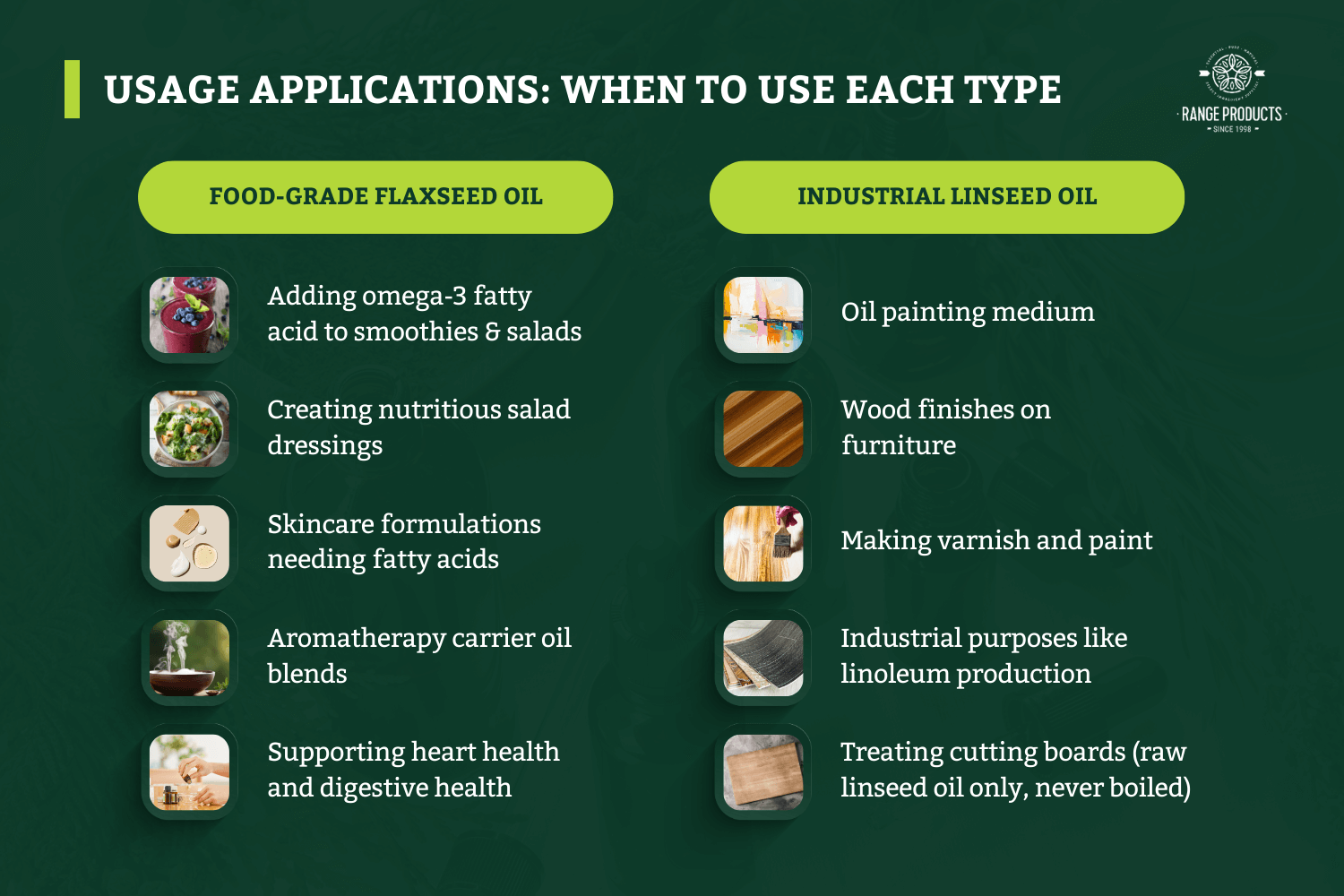
Food-grade flaxseed oil works perfectly for:
- Adding omega-3 fatty acid to smoothies and salads
- Creating nutritious salad dressings
- Skincare formulations needing fatty acids
- Aromatherapy carrier oil blends
- Supporting heart health and digestive health
Industrial linseed oil is designed for:
- Oil painting medium
- Wood finishes on furniture
- Making varnish and paint
- Industrial purposes like linoleum production
- Treating cutting boards (raw linseed oil only, never boiled)
Range Products stocks exclusively cold-pressed flaxseed oil to eliminate any safety confusion. Our products meet therapeutic standards for both consumption and topical application.
Why Omega-3 Content Matters: Flaxseed Oil vs Linseed Oil
The oil contains dramatically different nutritional value depending on processing. Cold-pressed linseed oil (food-grade flaxseed oil) preserves alpha-linolenic acid (ALA)—the plant-based omega-3 fatty acid your body needs. According to research published in Nutrients, properly processed flaxseed oil contains 50-60% ALA by weight.
This makes flaxseed one of the richest plant sources of omega-3 available, beating chia, hemp, and walnut oils. One tablespoon of flaxseed oil delivers about 7 grams of omega-3 fatty acids—more than four times the daily adequate intake. Your body converts some ALA into EPA and DHA, the same omega-3s found in fish oil.
How Processing Destroys Nutritional Value
The harsh methods used for industrial linseed oil damage these delicate molecules. Heat above 60°C breaks apart the chemical bonds that give omega-3s their health benefits. By the time industrial linseed oil reaches the bottle, it’s lost 20-40% of its original omega-3 content and what remains provides no nutritional value.
This explains why hardware store linseed oil is often processed with heat or chemicals and smells like paint—the fatty acids have transformed into polymer-forming compounds. Heating linseed oil or processing with heat and chemicals makes it unsuitable for nutrition but perfect for coating wood.
Health Benefits of Flaxseed Oil (Not Linseed Oil)
Food-grade flaxseed oil serves as an excellent omega-3 source for vegetarians and anyone avoiding fish oil supplements. The benefits of flaxseed oil include support for cardiovascular function, reduced inflammation, and improved skin health.
Supporting Heart Health
Regular consumption may help reduce triglycerides and support healthy blood pressure. The omega-3 content helps lower blood pressure slightly and improves blood vessel flexibility. These health benefits of flaxseed oil accumulate with consistent daily intake of 1-2 tablespoons.
The anti-inflammatory effects work throughout your body. Omega-3s help calm overactive immune responses, reduce joint pain, and help reduce inflammation by fighting harmful free radicals. This makes organic flaxseed oil valuable as a dietary supplement.
Digestive and Skin Benefits
Beyond omega-3s, flaxseed meal and oil support digestive health through natural fibre content. This promotes regular bowel movements and feeds beneficial gut bacteria. The oil also strengthens your skin barrier and reduces moisture loss when consumed or applied topically.
For skincare, the content of alpha-linolenic acid in flaxseed oil calms inflammatory conditions like eczema. Range Products’ therapeutic-grade flaxseed oil works beautifully in serums, massage oils, and moisturisers requiring omega-3 enrichment.
Types of Linseed Oil: Why Industrial Versions Are Dangerous
Industrial linseed oil comes in several forms, each used for industrial purposes but unsafe for human consumption. Understanding these types of linseed oil prevents dangerous mistakes.
Raw Linseed Oil
Raw linseed oil contains no added driers but still carries hexane residues from solvent extraction. It dries slowly (3-5 days for thin coats) through natural oxidation. Whilst safer than boiled variants, it’s still not food-grade and shouldn’t be consumed.
Boiled Linseed Oil
Despite the name, boiled linseed oil isn’t actually boiled. Manufacturers add cobalt, manganese, or calcium compounds that act as drying agents. These metallic additives speed drying time to 12-24 hours but create severe toxicity risks. The compounds absorb through skin and accumulate in your body with repeated exposure.
Stand Oil
Stand oil results from heating linseed oil to 300°C without oxygen, creating a thick, honey-like consistency. Artists use it for creating enamel-like finishes in oil painting. Like other industrial variants, it’s unsafe for consumption.
Warning: Never use hardware store linseed oil internally. The chemical residues and potential heavy metal content pose serious health risks including nervous system damage, organ toxicity, and cancer risk.
When You Actually Need Industrial Linseed Oil
Industrial linseed oil excels in specific applications where its chemical properties create superior results. Traditional oil painters rely on it because linseed oil dries through oxidation rather than evaporation, creating durable paint films that last centuries.
Wood Finishing Applications
Furniture makers use linseed oil to protect timber. The oil penetrates deeply, displacing moisture whilst forming protective layers. This creates water-resistant surfaces that highlight natural wood patterns. Many woodworkers treat cutting boards with food-safe raw linseed oil, though food-grade flaxseed oil works better for this purpose.
Cricket bat manufacturers traditionally apply 6-8 coats to seal willow wood. The oil saturates wood fibres completely, creating the perfect balance for professional play.
Industrial Manufacturing
Linoleum flooring production represents the largest use for industrial linseed oil. Manufacturers oxidise the oil into a rubbery material, mix it with cork powder and natural pigments, then press it onto fabric backing. The resulting flooring provides durable, naturally antimicrobial surfaces.
How to Store and Use Flaxseed Oil Properly
Flaxseed oil requires careful handling due to its high omega-3 content. Those beneficial fatty acids also make it prone to going rancid quickly when exposed to heat, light, or oxygen. The oil may spoil within days if stored improperly.
Storage Guidelines
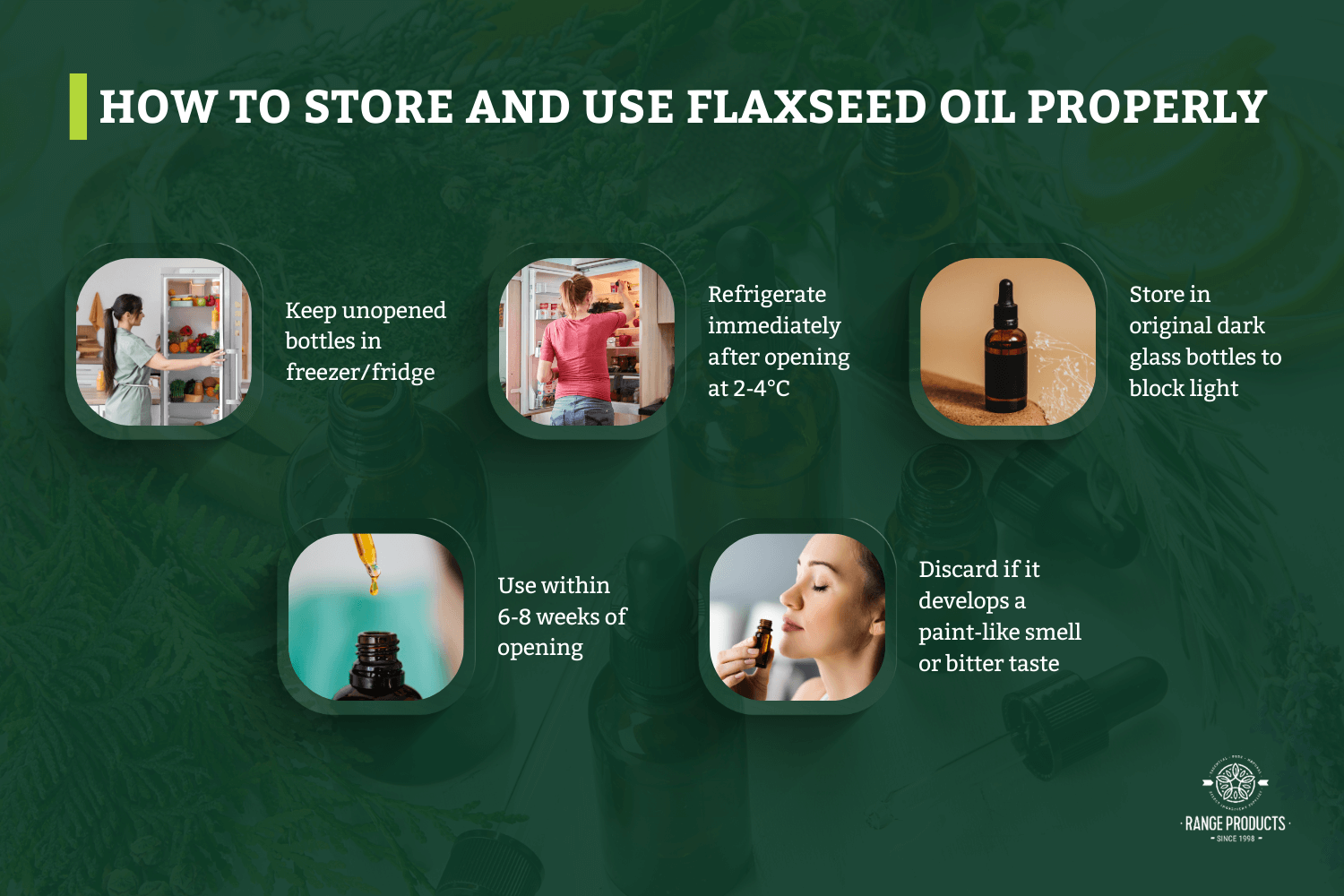
- Keep unopened bottles in your freezer or fridge
- Refrigerate immediately after opening at 2-4°C
- Store in original dark glass bottles to block light
- Use within 6-8 weeks of opening
- Discard if it develops a paint-like smell or bitter taste
Fresh flaxseed oil should taste mildly nutty. Any bitterness or paint smell signals oxidation—throw it out rather than consuming rancid oil that creates inflammation.
Usage Recommendations
For Nutrition:
- Add 1-2 tablespoons daily to smoothies or salads
- Never heat above 107°C (don’t cook with it)
- Drizzle over finished dishes
- Blend with olive oil for dressings
For Cosmetics:
- Incorporate at 2-15% in skincare formulations
- Add vitamin E to prevent oxidation
- Use in facial serums for omega-3 benefits
- Blend with stable carriers like sweet almond oil
Range Products recommends purchasing quantities you’ll use within 2-3 months to ensure maximum freshness.
Comparing Flaxseed Oil to Other Oils
Can you substitute flaxseed oil for other oils? It depends on your goal. Flaxseed oil’s unique omega-3 composition provides benefits that sweet almond oil, jojoba, and grapeseed oil simply can’t match. This makes it irreplaceable for applications requiring anti-inflammatory properties.
For massage therapy, blend flaxseed oil (20-30%) with more stable carriers. This combines omega-3 benefits with better glide and extended shelf life. For supplementation, you can’t effectively substitute other plant oils because none match flaxseed’s concentration. Only marine oils provide direct EPA and DHA, though these raise concerns for vegetarians.
Why Choose Range Products for Premium Flaxseed Oil
Range Products serves Australian formulators, health practitioners, and wellness enthusiasts with over 500 premium ingredients meeting pharmaceutical standards. Our cold-pressed flaxseed oil undergoes third-party testing with certificates of analysis available upon request.
We supply bulk quantities for commercial manufacturing, with wholesale pricing from 5-litre containers through 200-litre drums. Australian warehouse facilities ensure rapid delivery with cold-chain logistics maintaining refrigerated conditions for temperature-sensitive products.
Ready to Source Quality Flaxseed Oil?
Understanding the difference between linseed and flaxseed oil empowers you to make safe purchasing decisions. Food-grade, cold-pressed flaxseed oil from Range Products delivers omega-3 nutrition, cosmetic versatility, and guaranteed safety through Australian compliance standards.
Range Products eliminates confusion through our curated selection of exclusively therapeutic-grade products. Browse our carrier oil catalogue today or contact our team for personalised recommendations. Let us supply the premium ingredients that bring your wellness products to life.
Linseed Oil Vs Flaxseed Oil | FAQs
Can I cook with flaxseed oil at high temperatures?
No, never heat flaxseed oil above 107°C or use it for frying or baking. The high omega-3 content breaks down rapidly when heated, losing all benefits whilst creating potentially harmful compounds. Instead, drizzle it over finished dishes or use in cold salad dressings to preserve its health-promoting properties.
How can I tell if my flaxseed oil has gone rancid?
Rancid flaxseed oil develops a distinctive paint-like odour and bitter taste. Fresh oil should smell mildly nutty and taste slightly rich without throat irritation. If you notice off-putting smells or flavours, discard the oil immediately—consuming oxidised oil creates inflammation rather than providing benefits.
Can I use hardware store linseed oil on cutting boards?
Only raw linseed oil is sometimes used on cutting boards, but food-grade flaxseed oil is the safer choice. Never use boiled linseed oil on any surface that contacts food, as it contains toxic metallic driers. The oil used for industrial applications should never touch anything you eat from or prepare food on.
Back to Top: Linseed Oil vs Flaxseed Oil | What’s the Real Difference Anyway?